


Winter-Proof Your Body: Prehab for 2025 Skiers & Runners
Planning a ski trip or training for the London Marathon? Discover why "Pre-Hab" is the 2025 trend for injury prevention. Learn how Clinical Pilates protects your joints against the winter cold and prepares you for the slopes.
Winter-Proof Your Body: Why "Pre-Hab" is the 2025 Secret Weapon for Wimbledon’s Skiers and Runners
Pre-hab Pilates helps skiers and runners stay injury-resistant through winter by improving joint control, strength, mobility, and balance before problems start. In a clinical setting, sessions target the hips, knees, ankles, and spine, preparing you for skiing, marathon training, and slippery pavements with smarter movement, not harder workouts.
As the festive lights go up on Wimbledon High Street and the temperature drops across London, it is natural for our bodies to crave hibernation. The mornings are darker, the air is damper, and let’s be honest, the motivation to move often loses the battle against a warm duvet.
However, for many of our clients at The Pilates Clinic, this season signals something else entirely: preparation. Whether you are gearing up for the slopes in February, eyeing the London Marathon start line in April, or simply trying to navigate the icy pavements of SW19 without a stiff back, winter presents a unique set of biomechanical challenges.
This year, we are seeing a significant shift in the wellness world. We are moving away from the old "burn calories" mindset toward "Pre-Hab." This proactive approach to injury prevention is trending heavily for 2025, and it is exactly what Clinical Pilates does best.
In this guide, we’ll explore why your joints feel different in winter, how Pilates serves as the ultimate conditioning tool for ski and run season, and why moving with intention is the key to thriving through the British winter.
The Science of Winter Stiffness: Why Do My Joints Hurt?
It isn’t just in your head. London’s winter weather genuinely affects how your body moves. Many clients come to us in December complaining of "rusty" hips or a "locked" spine. But why does the cold hit us so hard?
The Pressure Drop
The primary culprit is often a drop in barometric pressure, which typically happens right before cold, damp weather sets in. According to data supported by Versus Arthritis, a drop in atmospheric pressure can cause tissues in your body to expand slightly.
While this expansion is microscopic, think about it in the context of a confined space like a knee or hip capsule. That slight swelling increases pressure on sensitive nerves, leading to that familiar winter ache. It is essentially your joints acting as a barometer.
The "Winter Hunch"
Walk down Wimbledon Hill on a freezing Tuesday morning and look at the posture of the commuters. Shoulders are hiked up to ears, heads are buried in scarves, and bodies are tense. We subconsciously contract our muscles to conserve heat.
This leads to chronic tension in the neck and shoulders (specifically the Trapezius and Levator Scapulae) and a shortening of the hip flexors as we take smaller, more guarded steps on slippery pavements. Pilates acts as the antidote to this instinctive hunch, restoring length to tight tissues and mobilising joints to flush out the stagnation caused by the cold.
Slope Ready: The Clinical Approach to "Ski-Lates"
With the February half-term approaching, many of you are prepping for the Alps. Skiing is a high-demand sport that requires unique biomechanics because you are essentially holding a squat while navigating unpredictable terrain at speed.
Injuries often occur on "Day 3 Fatigue." This is the point when the muscles tire, technique falters, and the ligaments (specifically the ACL in the knee) end up taking the load. Here is how Clinical Pilates acts as your injury insurance policy.
1. Eccentric Quad Strength
Skiing isn't just about pushing up; it is about controlling the descent. This requires eccentric strength, which is the ability of a muscle to lengthen under tension.
On the Reformer, we use the springs to mimic this load. Exercises like Scooter or Eve's Lunge require you to stabilise a bent knee while the carriage pulls you off balance. This replicates the demand of a turn on the slopes, training your quads to act as efficient brakes.
2. Glute Medius & Lateral Stability
Skis move independently. If your Gluteus Medius (the side glute) is weak, your knee tends to collapse inward during a turn. This "valgus stress" is a common mechanism for knee ligament injuries.
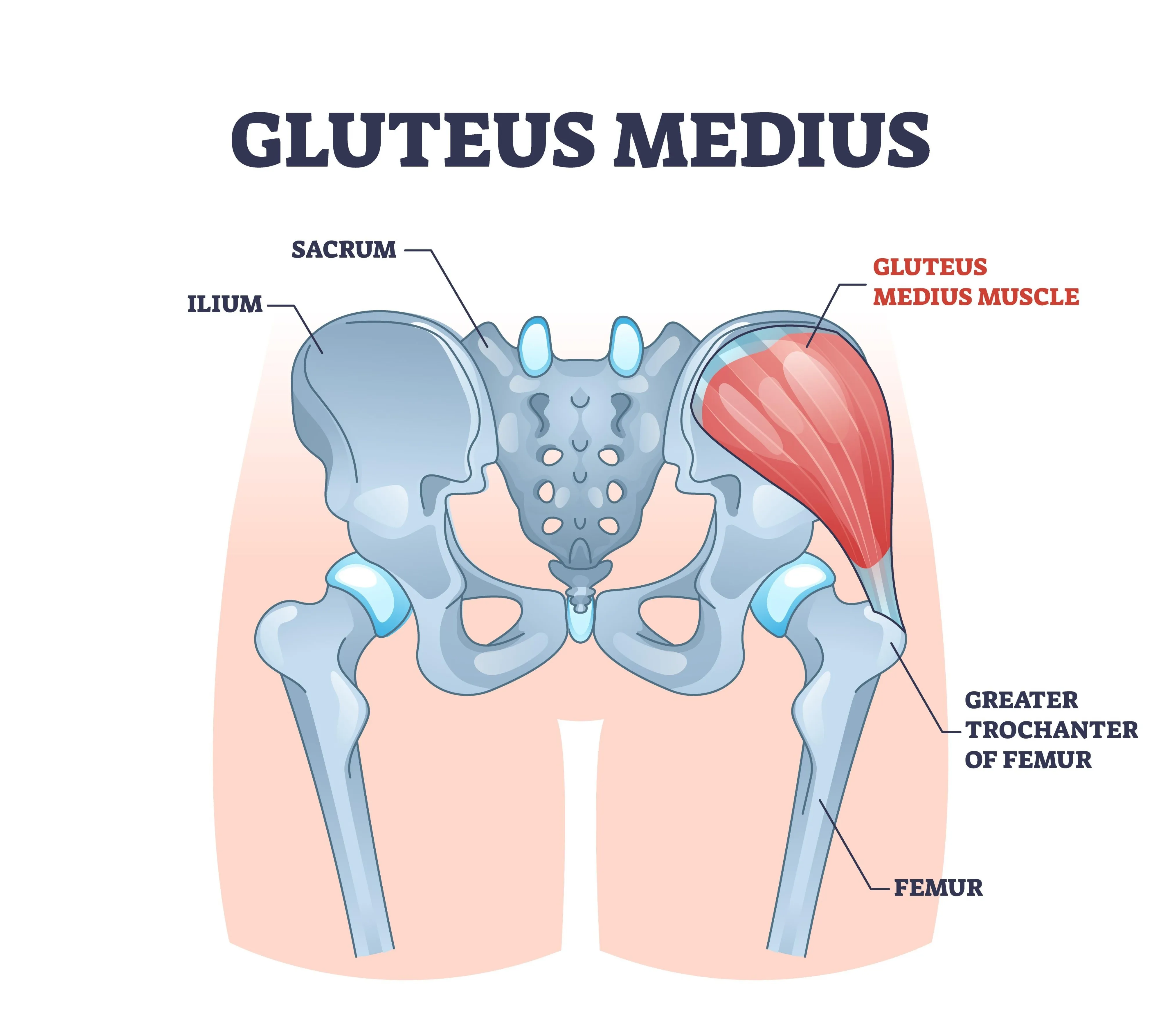
We tackle this with the Pilates Side-Lying Series and single-leg Reformer work. These target the deep stabilisers to ensure your knee tracks correctly over your toes, even when you are fatigued on a challenging red run.
3. Dissociation and Rotation
Skiing requires your legs to turn underneath you while your upper body remains quiet and faces down the mountain. This is called dissociation.
We train your thoracic spine (upper back) to rotate freely while your pelvis remains stable. This separation of movement is the hallmark of an advanced skier and is fundamental to the BASI Pilates method we teach.
Clinical Insight: A systematic review in the Journal of Sport and Health Science suggests that neuromuscular training, such as Pilates, significantly reduces the risk of ACL injuries in alpine sports by improving proprioception, or body awareness.
Pounding the Pavements: Pilates for the London Marathon
If you were lucky enough to secure a ballot place for the London Marathon, your training likely kicks off in earnest this January. However, running is a high-impact, repetitive activity. Without a strong chassis, the engine will eventually break down.
The Pelvic Stability Factor
When you run, you are essentially hopping from one leg to the other. For that split second of single-leg stance, your pelvis must remain level. If it drops, known as a Trendelenburg gait, it causes a chain reaction of malalignment down to the IT Band and knee.
Pilates focuses intensely on Pelvic Stability. By strengthening the deep core (Transversus Abdominis) and the pelvic floor, we create a rigid cylinder of support for your torso. This prevents "energy leaks," making your stride more efficient and protecting your lower back from the jarring impact of the road.
Breath Efficiency
Runners often focus on legs and lungs but forget the mechanics of breathing. In Pilates, we teach 3D lateral breathing. This means expanding the ribs sideways and into the back rather than just shallow chest breathing.
Utilising the full capacity of your diaphragm means better oxygen exchange. That equals better endurance and less chance of a "stitch" during those long Sunday runs across Wimbledon Common.
Winter Wellness: Immunity and The Lymphatic System
Beyond muscles and joints, winter is the season of colds and flu. Surprisingly, Pilates can play a role in your immune defence.
Unlike your heart, which pumps blood, your lymphatic system (the body's waste disposal unit) has no pump. It relies on muscular contraction and breath to move lymph fluid and flush out toxins.
The Reformer is excellent for this. The dynamic movement of the carriage, combined with deep diaphragmatic breathing and overhead arm movements, acts as a pump for the lymphatic system. Additionally, inversion exercises where hips are lifted higher than the heart (like Short Spine Massage or Bridges) use gravity to assist lymphatic drainage from the legs. It is perfect for reducing that "heavy leg" feeling after a day of sedentary desk work or winter shopping.
Beating the "SAD" Blues: The Mind-Body Connection
Seasonal Affective Disorder (SAD) is real, affecting roughly 2 million people in the UK according to NHS estimates. The lack of sunlight can lead to a drop in serotonin, making us feel lethargic and low.
While we cannot control the London weather, we can control our internal state. Pilates is mindful movement. It requires such deep concentration on alignment, breath, and flow that it is impossible to worry about your to-do list while on the machine.
This "active meditation" lowers cortisol levels. Leaving the studio after a 55-minute class, you don't just feel physically taller; you feel mentally lighter. It is a dedicated hour of self-care that insulates you against the January gloom.
5 Actionable Tips for a Winter-Proof Body
You cannot live on the Reformer (as much as we might like to!), so here are five lifestyle shifts to support your Pilates practice this winter:
- Vitamin D is Non-Negotiable: The NHS recommends all adults in the UK take a 10-microgram Vitamin D supplement between October and March. It is vital for bone health and muscle function.
- Hydrate with Warmth: Cold water is unappealing in December, leading to dehydration which stiffens fascia. Switch to herbal teas or warm water with lemon to keep tissues hydrated and pliable.
- The "Pre-Walk" Warm-up: Before heading out for a dog walk on the Common, do two minutes of standing hip swings and heel raises. Warming the synovial fluid in your joints before exposing them to cold air reduces injury risk.
- Invest in Grip: If you are running outside, check the tread on your trainers. Slipping on wet leaves causes sudden, jerky movements that strain the groin and hamstrings. Stability starts from the ground up.
- Prioritise Recovery: If you are training hard for skiing or running, ensure you are prioritising sleep. It is during deep sleep that growth hormone is released, which repairs the micro-tears in your muscles.
Frequently Asked Questions (FAQ)
Q: Is Pilates good for ski preparation?A: Yes. Pilates builds eccentric leg strength and pelvic stability, which are crucial for absorbing impact and protecting the knees (specifically the ACL) on the slopes.
Q: Why do my joints ache more in winter?A: Cold weather often brings a drop in barometric pressure. This can cause tissues in the joints to expand slightly, pressing on nerves and causing pain, particularly in the knees and hips.
Q: Can Pilates help with seasonal depression (SAD)?A: Pilates is a form of mindful movement that can lower cortisol (stress) levels. While not a cure, the combination of physical activity and deep breathing is a proven mood booster during darker months.
Conclusion: Don't Wait Until Something Snaps
The old philosophy was "no pain, no gain." The 2025 philosophy is longevity. It is about training smarter, not just harder.
At The Pilates Clinic, we don't just teach you exercises; we teach you your body. We identify those subtle imbalances—the weaker left glute, the tight right shoulder—before they become painful injuries on the slopes or the running track.
Whether you are a seasoned marathoner, an avid skier, or someone who simply wants to get through winter without back pain, "Pre-Hab" is your most valuable tool.
Ready to winter-proof your body?
If you are planning a ski trip or starting marathon training, now is the perfect time for a biomechanical assessment.
Book a Private Session or Reformer Class with our specialist team today. Let’s make this your strongest, most pain-free winter yet.


Chronic pain and poor sleep often go hand in hand. Research shows that reformer Pilates can help reduce pain, improve movement confidence, and support better sleep quality, helping to break the cycle and improve everyday wellbeing.

Since 2000, Lisa Lamberti has built The Pilates Clinic into one of Wimbledon’s most trusted studios, a BASI faculty-led centre with rehabilitation at its core.
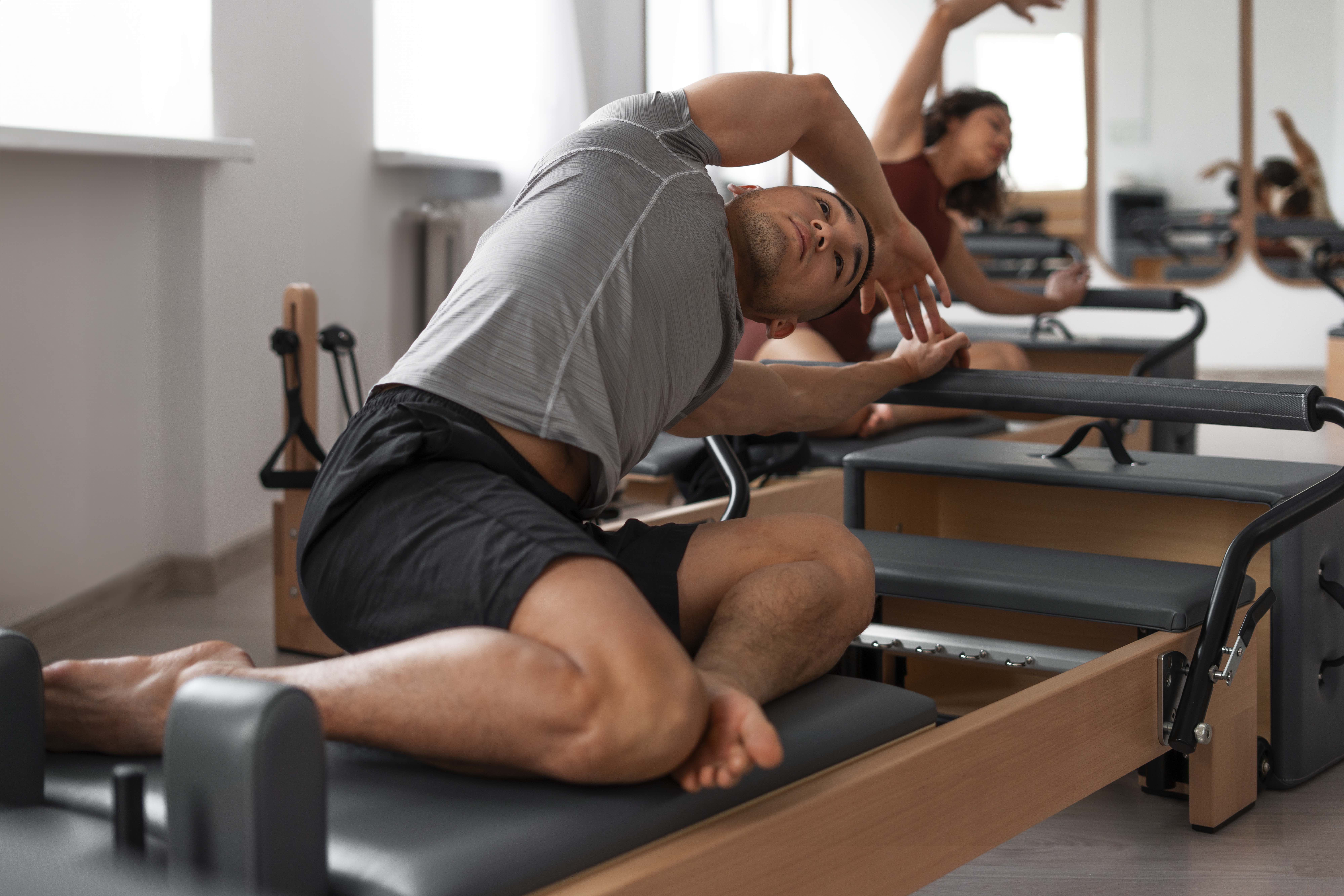
Pilates for men is rapidly shifting from niche to necessity, especially for those dealing with tight hips, back pain, or desk-related stiffness. At The Pilates Clinic in Wimbledon, reformer Pilates for men is used to improve mobility, core strength, and long-term injury resilience—backed by emerging research and real-world clinical results.


Follow us on Social media


