


Osteoporosis: Can Pilates Actually Increase Bone Density?
Diagnosed with osteopenia and not sure what movement is safe? Here’s how bone-safe Pilates can load the hips and spine, build strength, and improve balance without risky flexion.
Osteoporosis: Can Pilates Actually Increase Bone Density?
Yes, Pilates can play a vital role in managing osteoporosis by improving bone mineral density (BMD) through specific resistance based exercises. While weight bearing movement is key, the real power of Pilates lies in osteogenic loading. This involves using Reformer springs and your own body weight to stimulate bone building cells called osteoblasts. For those in Wimbledon seeking to protect their skeletal health, Pilates offers a safe and evidence based pathway to stronger bones and reduced fracture risk.
Understanding Osteoporosis and the Power of Movement
Osteoporosis is often described as a "silent disease" because it is characterised by the thinning of bone tissue and loss of density over time without obvious symptoms. For many of our clients at The Pilates Clinic in Wimbledon, a diagnosis can feel like a major limitation. It often sparks real fears about falls or fractures. However, the latest research suggests that the right kind of movement is not just safe, it is actually medicinal.
Bone is a living and dynamic tissue that responds to physical stress. When we subject our bones to controlled mechanical loading, it triggers a biological response known as Wolff’s Law. This law states that bone grows or remodels in response to the forces placed upon it. At our Wimbledon (SW19) studio, our expert teachers move beyond generic exercise to provide specialized Pilates that targets this exact mechanism.
How does Pilates help Osteoporosis?
Pilates helps osteoporosis by using mechanical loading and resistance to stimulate bone remodeling. By using equipment like the Reformer and Cadillac, we apply site specific stress to the hips and spine. These are the areas most vulnerable to fractures. At the same time, we improve the balance and muscle strength required to prevent falls.
The Science of Osteogenic Loading
To increase bone density, the stimulus must be greater than what the body experiences during your normal daily activities. According to research on mechanical loading, bone adapts its strength to the maximum stress it regularly encounters. In our Wimbledon studio, we utilize the Pilates Reformer and Chair to provide adjustable spring resistance. This allows us to load the skeletal system more intensely than floor based exercises alone, which encourages the body to deposit calcium and minerals into the bone matrix.
Targeting the At Risk Zones
Osteoporotic fractures most commonly occur in the wrist, hip, and spine. Expert led Pilates is uniquely suited to address these areas. Through precise movements, we can strengthen the multifidus, which are the deep stabilising muscles of the spine, as well as the muscles surrounding the femoral neck. This doesn't just support the bone, it creates a muscular corset that offloads pressure from the vertebrae.
Enhancing Proprioception and Balance
Beyond density, we must address the primary cause of fractures, which is falling. Pilates is world renowned for improving proprioception. This is your body's ability to sense its position in space. By challenging the vestibular system and strengthening the pelvic floor and ankles, we significantly reduce the likelihood of a trip resulting in a serious injury.
Is Pilates safe for someone with low bone density?
Direct Answer: Yes, Pilates is highly safe for those with osteoporosis as long as it is bone safe and supervised by expert instructors. Our approach avoids spinal flexion, such as forward bending, and focuses instead on spinal extension and neutral alignment. This protects the vertebrae from compression fractures while building strength.
The Importance of Bone Safe Modifications
In a standard fitness class, movements like "the hundred" or "roll ups" involve deep spinal flexion. For an osteoporotic spine, this creates a "wedging" force on the vertebrae that can be risky. At The Pilates Clinic, our expert teachers replace these movements with isometric core work and extension based exercises that promote a tall and resilient posture.
Your Initial Consultation
Every client at our Wimbledon studio begins with a thorough initial consultation. We review your health history. This ensures that the resistance levels are high enough to be effective but controlled enough to be entirely safe for your specific bone health status.
Can Pilates improve posture and height loss in Osteoporosis?
Pilates is exceptionally effective at counteracting the "dowager’s hump" or kyphosis associated with osteoporosis. By strengthening the thoracic extensors and opening the chest, Pilates helps clients maintain an upright posture. This effectively helps people reclaim lost height and reduces the forward leaning pressure on the spine.
Addressing the Thoracic Spine
One of the most visible impacts of bone loss is the rounding of the upper back. This occurs when the front of the vertebrae weakens and collapses slightly. In our sessions, we focus heavily on thoracic extension. Using the Pilates Cadillac, we can support the spine while gently encouraging it to move into a more upright position. This stretches the tight pectoral muscles and strengthens the mid back.
Real World Success
We have seen the direct impact of these techniques within our own community. A powerful example is how Sarah used Pilates to increase her bone density by 4.5% in her spine over three years. By combining her prescribed medication with consistent and supervised Pilates sessions at our clinic, Sarah moved from an osteoporosis diagnosis back into the normal range for her age. This demonstrates that while medication prevents further loss, the bone building stimulus often comes from the specific mechanical loading we provide.
What does the evidence say about Pilates and Bone Health?
Clinical studies, including those highlighted by the NHS, suggest that regular weight bearing and resistance exercise are the gold standards for bone maintenance. Specific trials on Pilates have shown significant improvements in BMD of the lumbar spine and physical functional performance in postmenopausal women.
The Role of Resistance
Progressive resistance training is supported by strong clinical evidence. For example, a study published in Osteoporosis International highlights how progressive resistance training can significantly improve bone mineral density in the spine and hips of postmenopausal women. By carefully increasing the load on the bones through Pilates springs, we provide the necessary stimulus to help maintain and even build bone mass.
Long Term Management
Osteoporosis is a chronic condition, which means management must be sustainable. Unlike aggressive gym regimes that can lead to joint pain, the low impact nature of Pilates allows for long term adherence. Consistency is the most important factor in bone remodeling. It usually takes approximately 6 to 12 months of regular stimulus to see changes on a DEXA scan.
Strengthening Your Future in Wimbledon
Living with osteoporosis doesn't have to mean living in fear of movement. In fact, movement is your greatest tool for maintaining independence and vitality. By combining the principles of Joseph Pilates with modern biomechanical science, we provide a pathway to a stronger and more resilient body.
At The Pilates Clinic, we pride ourselves on being a bridge between medical diagnosis and physical empowerment. Whether you are in the early stages of osteopenia or managing established osteoporosis, our expert team in Wimbledon is here to guide you through a safe, effective, and evidence based movement programme.
Ready to strengthen your bones? Book an Initial Consultation at The Pilates Clinic Wimbledon today and let us help you build a movement plan tailored to your skeletal health.
Wimbledon Pilates FAQ
Is Pilates better than walking for Osteoporosis?
While walking is great for cardiovascular health, it often lacks the multi directional loading and upper body resistance required for comprehensive bone health. Pilates provides targeted resistance for the spine and wrists which walking does not address.
Does Pilates build bone density?
Yes. Pilates uses controlled resistance from the Reformer and Cadillac to load the hips and spine beyond what daily activity provides, which stimulates bone remodeling. Combined with medical treatment, this can help maintain or improve bone mineral density over time.
How often should I do Pilates to see bone benefits?
For the best results, we usually suggest aiming for 2 to 3 sessions per week. Bone tissue needs a consistent stimulus to grow stronger, but it also needs time to rest. It is actually during those recovery periods between sessions that your body does the hard work of building new bone.
Can I join a group class if I have Osteoporosis?
At our Wimbledon studio, we recommend starting with an initial 1:1 consultation. This allows our expert teachers to guide you through the necessary bone safe modifications before you join a small group. This ensures you can eventually move in a group setting with total confidence and safety.
What should I wear to my first session?
Wear comfortable and breathable exercise clothing that allows you to move freely. Grip socks are recommended for safety on the equipment.


Chronic pain and poor sleep often go hand in hand. Research shows that reformer Pilates can help reduce pain, improve movement confidence, and support better sleep quality, helping to break the cycle and improve everyday wellbeing.

Since 2000, Lisa Lamberti has built The Pilates Clinic into one of Wimbledon’s most trusted studios, a BASI faculty-led centre with rehabilitation at its core.
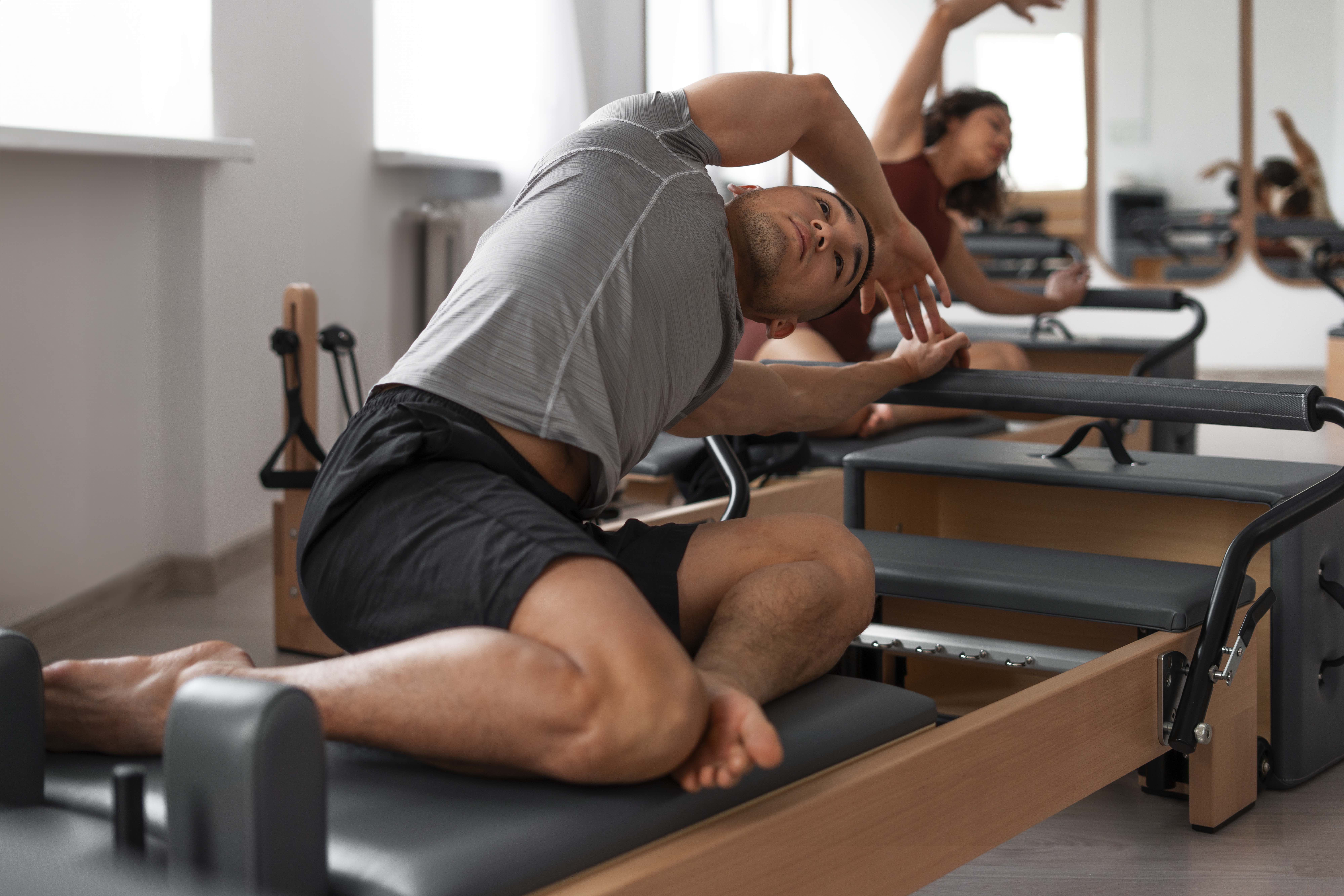
Pilates for men is rapidly shifting from niche to necessity, especially for those dealing with tight hips, back pain, or desk-related stiffness. At The Pilates Clinic in Wimbledon, reformer Pilates for men is used to improve mobility, core strength, and long-term injury resilience—backed by emerging research and real-world clinical results.


Follow us on Social media


