


Reversing "Tech Neck" for Wimbledon's Desk Workers
In this guide, we break down why it happens (it is not just “bad posture”) and how Pilates helps restore your natural cervical curve by strengthening deep neck flexors, improving thoracic mobility, and releasing tight chest muscles.
Reversing tech neck involves restoring the natural curve of the cervical spine through targeted strengthening of the deep neck flexors and stretching of the pectoral muscles. For Wimbledon’s desk workers, the most effective solution is a combination of ergonomic adjustments and expert led movement. By focusing on the multifidus and upper back extensors, you can counteract the forward pull of digital devices. At our studio, we specialize in programs that realign the head over the shoulders, reducing strain and preventing long term structural issues.
The Modern Epidemic: Understanding Tech Neck in Wimbledon (SW19)
If you work in an office in Wimbledon or commute from SW19 into the City, you are likely very familiar with the dull ache at the base of your skull or the tightness across your shoulders by mid afternoon. This condition, often called "Tech Neck," refers to the stress injury caused by leaning forward to look at screens. When the head hangs forward, the effective weight on the neck increases significantly. Over time, this causes the muscles at the back of the neck to overstretch while the muscles at the front become weak.
At our studio, we see many professionals who have simply accepted this discomfort as a normal part of office life. However, chronic postural misalignment can lead to more serious issues like tension headaches or nerve impingement. Reversing this trend requires more than just trying to sit up straight for a few minutes. It requires a reset of your movement patterns and the strengthening of the deep stabilisers that hold your frame in place.
How does Pilates help Tech Neck?
Pilates targets tech neck by strengthening the deep cervical flexors and thoracic extensors while releasing the tight chest muscles that pull the shoulders forward. Through precise movements on the Reformer and Cadillac, we restore the natural alignment of the spine and reduce the mechanical load on the neck.
The Role of the Deep Cervical Flexors
Most people try to fix their posture by pulling their shoulders back, but the root of tech neck often lies in the front of the throat. The deep cervical flexors are small muscles that stabilise the neck. When these are weak, the larger muscles at the surface take over, leading to a "jutting" chin. In our Wimbledon (SW19) studio, our expert teachers use specific exercises to re-educate these deep muscles, helping the head sit comfortably atop the spine.
Thoracic Mobility and the Hunch
The neck does not exist in isolation. If your mid back is stiff and rounded, your neck has no choice but to crane forward to look ahead. According to the NHS, a rounded upper back is one of the most common postural errors. We use the Pilates Reformer to create extension in the thoracic spine. This opens the chest and allows the shoulder blades to glide correctly, which immediately offloads the pressure on the neck.
Restoring Proprioception
Many desk workers have lost the "map" of where their body is in space, which is a concept known as proprioception. They may feel like they are standing straight when they are actually leaning forward. Pilates uses the feedback of the equipment springs and the floor to help you rediscover your neutral alignment. This neurological reset is essential for making good posture a subconscious habit rather than a tiring chore.
Can you really reverse years of desk-based slouching?
Yes, postural habits can be reversed through consistent movement that addresses both muscle length and strength. By lengthening the pectorals and strengthening the mid back muscles, we can unfold the body. Pilates creates lasting change by teaching the nervous system to prefer a neutral, upright position.
Addressing Muscle Imbalance
Tech neck is a classic case of muscle imbalance where the back of the neck and the front of the chest are tight, while the front of the neck and the mid back are weak. At our Wimbledon (SW19) studio, we do not just stretch the tight areas. We use the resistance of the Cadillac and Chair to specifically wake up the dormant muscles in the back, creating a balanced pull from both sides of the body.
The Importance of the Scapular Stabilisers
Your shoulder blades should act as a stable base for your neck. If they are sliding up toward your ears, your neck muscles have to work twice as hard. We focus heavily on the muscles that stabilise the shoulder blades. Strengthening these ensures your shoulders stay down and back, providing a clear pathway for the neck to move without restriction. Research in the Journal of Physical Therapy Science supports the idea that scapular stabilisation is key to reducing neck pain in office workers.
Breath and the Ribcage
Believe it or not, how you breathe affects your neck. Many stressed desk workers are "chest breathers," using the muscles in their neck to lift the ribcage with every breath. In our initial consultations, we teach lateral thoracic breathing. This encourages the ribs to expand sideways, relaxing the neck and engaging the pelvic floor and deep abdominals.
Is Tech Neck causing your headaches and arm tingling?
Direct Answer: Frequently, yes. When the head is displaced forward, it can compress the nerves at the base of the skull, causing tension headaches. Furthermore, poor posture can lead to nerve pinching in the neck or chest, which causes tingling or numbness down the arms.
Nerve Gliding and Space Creation
When muscles are chronically tight, they can tether the nerves that pass through them. In our sessions, we use gentle, flowing movements to encourage nerve gliding. By creating space between the vertebrae and opening the area around the collarbone, we can often alleviate the "pins and needles" sensations that many desk workers experience.
Clinical Evidence for Movement
The British Medical Journal (BMJ) has highlighted the importance of therapeutic exercise over passive treatments like massage alone for long term neck pain management. While a massage might feel good in the moment, the targeted strengthening we provide ensures the pain does not return the second you sit back down at your computer.
How long does it take to see results?
Direct Answer: Most people feel a decrease in tension after their very first session. However, structural changes—where your natural resting posture is noticeably taller—typically take 10 to 12 weeks of consistent practice. This timeframe allows for the strengthening of postural muscles like the multifidus.
Real World Success
We recently worked with a local professional who suffered from chronic neck pain and brain fog due to poor posture. By focusing on thoracic mobility and deep neck strengthening twice a week, they reported a total cessation of headaches within six weeks. More importantly, they felt they had much more energy because their body was no longer fighting gravity just to keep their head up.
Taking the First Step Toward a Pain-Free Career
You do not have to choose between a successful career and a healthy spine. Tech neck is not an inevitable consequence of the digital age, it is a mechanical problem with a mechanical solution. By investing in your posture now, you are protecting yourself against the changes that can lead to chronic discomfort later in life.
At our studio, our expert teachers are dedicated to helping Wimbledon's professionals move better and feel stronger. We provide a supportive environment where your individual needs are the priority. Whether you are already in pain or simply want to prevent it, we have the expertise to help you stand taller.
Ready to stand taller? Book an Initial Consultation at our Wimbledon studio today and discover how Pilates can transform your working day.


Chronic pain and poor sleep often go hand in hand. Research shows that reformer Pilates can help reduce pain, improve movement confidence, and support better sleep quality, helping to break the cycle and improve everyday wellbeing.

Since 2000, Lisa Lamberti has built The Pilates Clinic into one of Wimbledon’s most trusted studios, a BASI faculty-led centre with rehabilitation at its core.
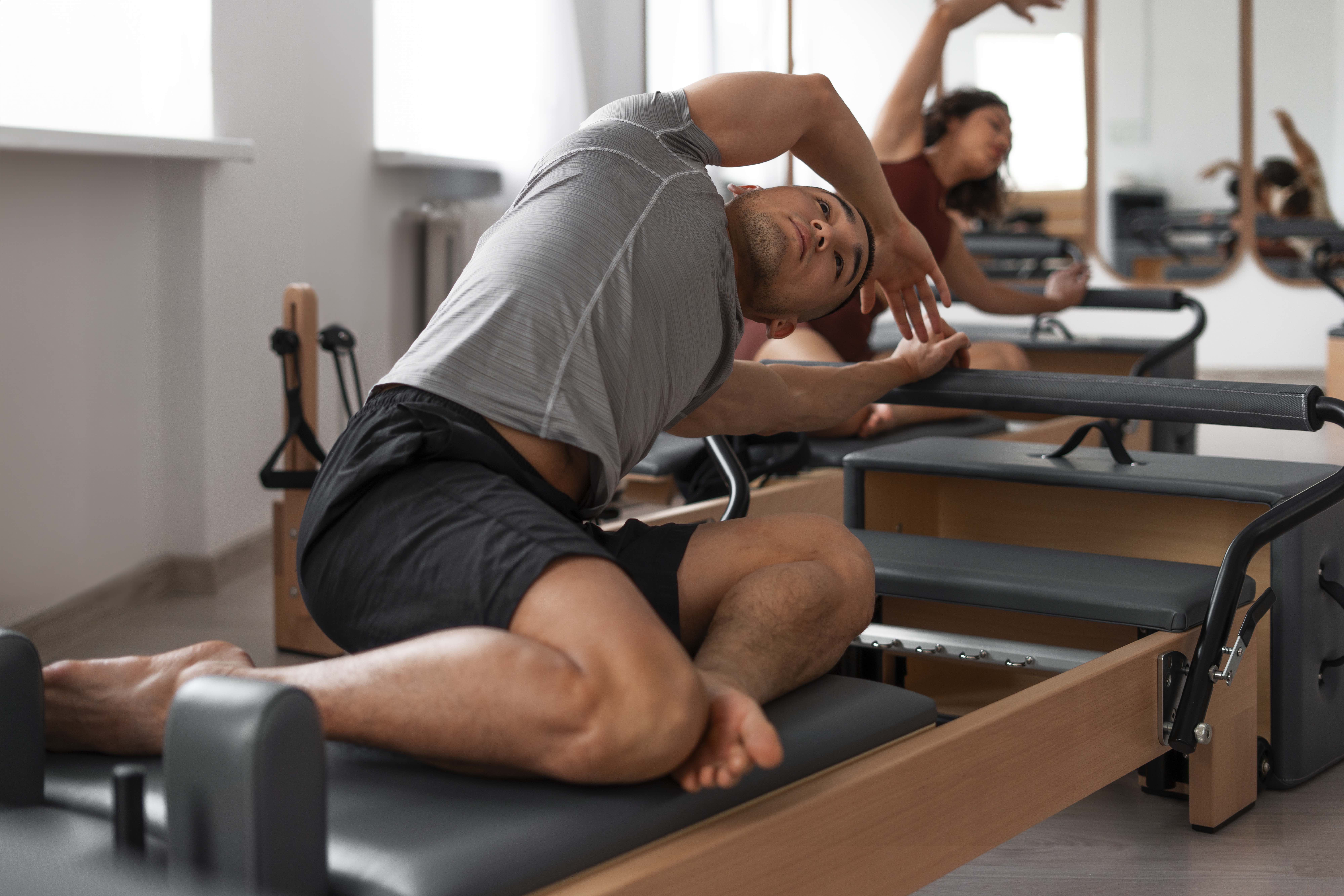
Pilates for men is rapidly shifting from niche to necessity, especially for those dealing with tight hips, back pain, or desk-related stiffness. At The Pilates Clinic in Wimbledon, reformer Pilates for men is used to improve mobility, core strength, and long-term injury resilience—backed by emerging research and real-world clinical results.


Follow us on Social media


