


Pilates for Dancers
From safer landings to stronger pirouettes, Pilates helps dancers balance flexibility with stability. Explore how our expert teachers in Wimbledon support performers at every level.
Pilates for dancers and performers works by balancing extreme flexibility with deep structural stability, specifically targeting the pelvic floor, multifidus, and transverse abdominis. In the high-stakes world of performance, injury prevention is as important as technical skill. By using resistance based equipment like the Reformer, dancers can strengthen their end range of motion, protecting joints from the repetitive strain of rehearsals. At our Wimbledon (SW19) studio, our expert teachers help performers build the resilient core and refined proprioception needed for a long and pain free career on stage.
The Performance Gap: Why Dance Training Isn't Enough
Dancers are among the most physically elite movers in the world, yet they are also among the most injury prone. Traditional dance training often focuses on aesthetic lines and extreme ranges of motion, which can lead to hypermobility issues if not supported by strength. For many performers visiting our studio in Wimbledon, the goal is to close the gap between being "flexible" and being "strong."
When a dancer relies solely on their superficial muscles to hold a position, they risk "gripping" in the hips or overextending the lower back. Pilates shifts the focus to the deep intrinsic muscles. By moving beyond the barre and onto the Pilates apparatus, performers learn to support their movements from the inside out, leading to higher jumps and steadier pirouettes.
How does Pilates help Dancers?
Pilates helps dancers by developing functional core stability and correcting muscle imbalances caused by turnout and repetitive movements. It strengthens the deep stabilisers of the hips and spine, allowing for greater control during complex choreography while reducing the impact on joints during landings.
Improving Turnout from the Hip
Many dancers try to force their turnout from the knees or ankles, which is a leading cause of injury. In our Wimbledon (SW19) studio, we use the Pilates Reformer to strengthen the deep lateral rotators of the hip. This ensures the turnout is supported by the correct musculature, improving the line of the leg without compromising the health of the knee joint.
Building Power for Jumps
The jumpboard on the Reformer is an invaluable tool for performers. It allows dancers to practice the mechanics of a jump, the plyometric push off and the controlled landing, in a horizontal and non weight bearing position. This builds the explosive power needed for jumps while teaching the feet and ankles how to absorb shock safely.
Enhancing Proprioception and Articulation
Precision is everything in performance. Pilates improves proprioception, which is your body’s internal GPS. By working with the springs of the Cadillac or Chair, dancers receive constant feedback on their alignment. This heightened awareness leads to better foot articulation and more fluid transitions between movements.
Expert Teachers Who Have Been in Your Shoes
At our studio, we don't just understand dance from a textbook. Many of our instructors at The Pilates Clinic are former professional dancers and movement experts themselves. They have navigated the same grueling rehearsal schedules and high pressure performances that you face every day.
This firsthand experience is invaluable. Our teachers know exactly how it feels to dance through an injury or struggle with a specific technical limitation. Because they have transitioned from the stage to expert level Pilates instruction, they can bridge the gap between dance terminology and clinical movement science. Whether you are working on your "developpé" or recovering from a calf strain, you are being guided by someone who truly understands the unique demands of a performer’s body.
Can Pilates prevent common dance injuries?
Yes, Pilates is a primary tool for injury prevention in the performing arts. By strengthening the eccentric (lengthening) phase of muscle contraction, it protects tendons from overuse. Addressing imbalances in the pelvic floor and hips also helps prevent common issues like hip labral tears and stress fractures.
The Power of Eccentric Strength
Most dance injuries occur during the landing or the lowering phase of a movement. Pilates is unique because it focuses heavily on eccentric strength, which is controlling the muscle as it lengthens. This type of training is essential for protecting the joints of performers who move through extreme ranges of motion.
Stabilising the Spine for Safety
Dancers often move into deep spinal extension. Without a strong multifidus and deep abdominal wall, this creates "hinging" in the lower back, which can lead to stress fractures. Our expert teachers at our studio focus on lumbar pelvic stability, ensuring the spine is supported by a muscular corset. This clinical approach is supported by research published in the National Library of Medicine, which demonstrates how core stability exercises are fundamental in preventing lower back injuries and enhancing overall athletic performance.
Does Pilates help with stage presence and breathing?
Absolutely. Pilates emphasizes lateral thoracic breathing, which allows a performer to maintain a strong and engaged core without holding their breath. This improves oxygen flow during intense numbers and helps a dancer maintain a calm and centered stage presence even under pressure.
Breathing for Stamina
Many performers hold tension in their neck and shoulders when they get tired. By teaching ribcage breathing, we help dancers keep their shoulders relaxed and their neck long, even when the heart rate is high. This not only looks better on stage but also improves respiratory efficiency, giving the performer more stamina for the final curtain call.
Supporting the Next Generation of Wimbledon Talent
Whether you are a student at a local dance academy or a seasoned professional living in Wimbledon, your body is your instrument. Just as a musician tunes their violin, a dancer must tune their neuromuscular system.
At our studio, we are proud to support the vibrant performing arts community in Wimbledon (SW19). Our expert teachers have a deep understanding of dance aesthetics and the physical demands of the stage. We are here to ensure that you can keep doing what you love, with more power, more grace, and fewer injuries.
Ready to elevate your performance? Book an Initial Consultation at our Wimbledon studio today and let our expert teachers help you build a stronger and more resilient body for the stage.
Pilates for Dancers FAQ
Is Pilates only for ballet dancers?
Not at all. We work with contemporary dancers, musical theatre performers, actors, and even professional musicians. Any performer who relies on their body for their craft can benefit from the improved alignment and core strength that Pilates provides.
Can Pilates help me get my leg higher (extensions)?
Yes, but perhaps not in the way you think. Often, a leg is "stuck" because the hip stabilisers aren't strong enough to hold the weight of the leg. By strengthening the base, the leg is free to move higher with less effort.
Should I do Pilates on the same day as dance class?
Many performers find that a low intensity Pilates session is a great way to warm up the deep stabilisers before a class. However, we often recommend doing your more intense Reformer work on a light rehearsal day to allow for muscle recovery.
Do I need a 1:1 session or can I join a group?
For performers, we almost always recommend an initial 1:1 consultation in our studio. This allows our expert teachers to look at your specific dance technique and any niggles you might have, ensuring your program is 100% relevant to your goals.
What should I wear?
Standard dance wear or comfortable gym wear is fine. We recommend grip socks for safety on the equipment.


Chronic pain and poor sleep often go hand in hand. Research shows that reformer Pilates can help reduce pain, improve movement confidence, and support better sleep quality, helping to break the cycle and improve everyday wellbeing.

Since 2000, Lisa Lamberti has built The Pilates Clinic into one of Wimbledon’s most trusted studios, a BASI faculty-led centre with rehabilitation at its core.
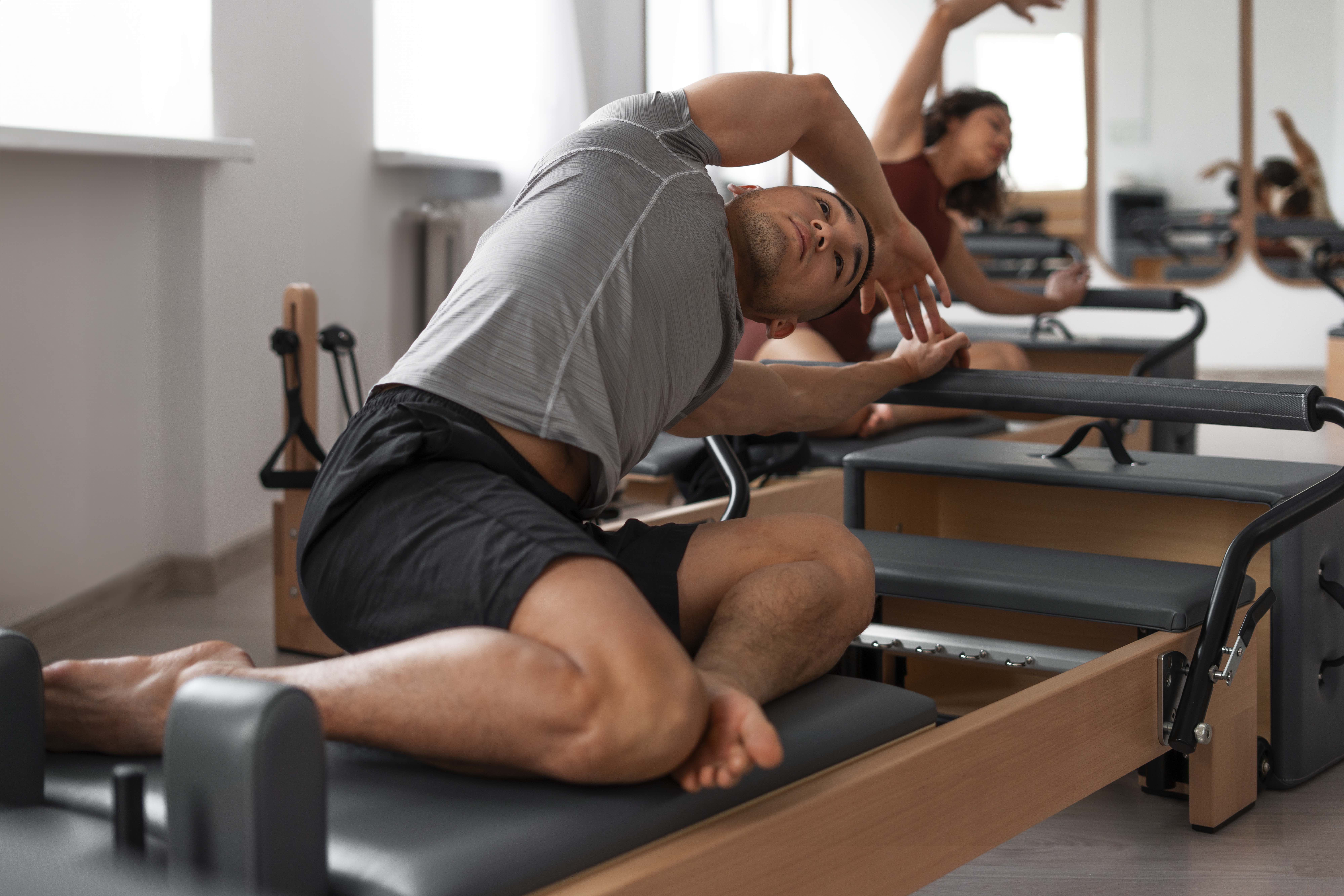
Pilates for men is rapidly shifting from niche to necessity, especially for those dealing with tight hips, back pain, or desk-related stiffness. At The Pilates Clinic in Wimbledon, reformer Pilates for men is used to improve mobility, core strength, and long-term injury resilience—backed by emerging research and real-world clinical results.


Follow us on Social media


