


Pilates at Christmas & New Year: A Reset You Can Stick To
Late December does something weird to the human nervous system. Days get shorter. Diaries get louder. Sleep gets scruffier. Movement becomes a “January problem” until your back, neck, or hips send a strongly worded complaint.
Late December does something weird to the human nervous system. Days get shorter. Diaries get louder. Sleep gets scruffier. Movement becomes a “January problem” until your back, neck, or hips send a strongly worded complaint.
Pilates is ideal for this season because it is low impact, adaptable, and specific. It can build strength, control, and mobility without smashing your recovery when you are already low on sleep and high on social plans. Research also consistently links Pilates-based exercise with reduced pain and improved function in several musculoskeletal contexts, including low back pain.
Pilates is one of the best Christmas-to-New-Year workouts because it improves strength and mobility with low joint stress, fits into tight schedules, and helps counter “holiday posture” from travel, sofas, and screens. Moderate activity through winter also supports mood and wellbeing, and can support general health habits during peak seasonal illness months.
What changes around Christmas. And why your body notices
Three seasonal shifts drive most of the “I feel stiff and broken” messages:
- More sitting, more driving, more sofa time
- Hips tighten, thoracic spine stiffens, glutes forget their job. Cue low back grumbles.
- Less daylight and inconsistent sleep
- Your recovery budget shrinks. Training that felt fine in October suddenly feels like a bad idea.
- Stress plus heavy diaries
- The nervous system gets twitchier. You hold tension higher. Neck and jaw join the chat.
Pilates is basically a structured conversation with those problems. Control, breath, alignment, and progressive loading. Not punishment. Doing the work with precision and purpose rather than chasing exhaustion is aligned with classical Pilates lineages and modern, movement-science-informed teaching approaches.
The December Pilates plan that works in real life
Think in “minimum effective dose”. The goal is consistency, not heroics.
The 3-session week (ideal)
- 1 private or semi-private session to individualise and progress
- 1 reformer class for strength and flow
- 1 mat session at home, 15–25 minutes
The 2-session week (still excellent)
- 1 studio session
- 1 short mat session at home
The 1-session week (holiday survival mode)
- 1 studio session, prioritise mobility, spine articulation, hips, and breath
- Add two 5-minute “movement snacks” during the week
That is not “settling”. That is intelligent periodisation for December.
Christmas-proof movement snacks. Five minutes, zero drama
Do one set. Breathe slowly. Stop before fatigue turns your form into modern art.
Spine wake-up
- Cat-cow x 6 slow reps
- Thread-the-needle x 3 each side
Hip relief
- Glute bridge x 8
- Figure-4 stretch x 30 seconds each side
Desk neck reset
- Chin nods x 6
- Wall angels x 6 (small range, ribs down)
Travel circulation
- Calf raises x 12
- Slow bodyweight squats x 8 (or sit-to-stand from a chair)
This is the kind of “keep it moving” advice UK health services routinely encourage over winter. Especially when people feel tempted to do nothing because it is cold and dark.
“I want to start Pilates in January.” Start now. Here’s why
The first week of January is where motivation goes to get mugged by reality.
Starting in late December gives you:
- a baseline. So your first January session feels familiar, not intimidating
- fewer aches. Because you are not going from zero to three classes
- better technique. So you progress safely once you ramp up
Also, Pilates is very popular right now. If you wait for January, you are competing with every other optimistic mammal on the island for the same class slots.
Common Christmas-season issues. And how Pilates helps
Lower back pain from sitting and driving
Pilates targets trunk control, hip mobility, and glute strength. For many people, that combination reduces flare-ups and improves confidence in movement.
What we typically focus on in sessions:
- pelvic control and spine articulation (without forcing range)
- posterior chain activation. Glutes and hamstrings doing their share
- breathing mechanics and ribcage mobility
Neck and shoulder tension
Holiday stress plus screens often equals upper traps doing everything.
Pilates helps by:
- improving scapular control (shoulder blade mechanics)
- strengthening mid-back support
- teaching breath patterns that downshift tension
“I feel dizzy on the reformer.”
This is more common than people think. Some clients experience motion sickness or dizziness from the moving carriage and position changes. The good news. It is usually manageable with smart pacing and modifications.
Try:
- slower transitions. Especially lying-to-standing
- stabilise your gaze. Pick a fixed point
- lighter springs and smaller range initially
- tell your instructor early. So they can adjust the session flow
Pilates for weight loss. The honest, non-salesy version
Pilates can support body composition goals, mainly by:
- improving strength and muscle endurance
- increasing overall activity consistency
- reducing pain. So you move more
But if “fat loss by next week” is the goal, December is a chaotic month to run an aggressive plan. A better target is: maintain, feel good, build a routine. Then progress in January.
A lot of credible festive-season health advice also pushes the same idea. Balance and consistency beat guilt spirals.
A simple Christmas-to-New-Year schedule you can copy
Week of 15–21 Dec
- 1 reformer session
- 1 short mat session (15–20 min)
- 2 movement snacks
Week of 22–28 Dec (Christmas week)
- 1 studio session, ideally earlier in the week
- 2 movement snacks
- 1 long walk if you can. No speed goals. Just daylight
Week of 29 Dec–4 Jan
- 1 studio session
- 1 mat session
- pick your January rhythm and pre-book it
Winter movement is widely recommended for mood and resilience. If you need a single “north star” habit this season. Walk daily, and keep one Pilates session anchored.
Pilates near Wimbledon. What to book first
If you are new, or returning after a break:
- start with a 1:1 session
- This gives you technique, confidence, and the right regressions.
If you already do Pilates and want structure:
- book a consistent weekly reformer slot
- Consistency beats intensity.
If you have pain, past injury, or you are nervous:
- choose clinical-style Pilates with assessment and tailored programming
- Also consider coordinating with your physio if relevant.
Frequently Asked Questions (FAQs)
Is Pilates good to start in winter?
Yes. It is low impact, indoor-friendly, and supports mobility and strength when people tend to sit more.
How many times per week should I do Pilates in January?
Two sessions per week is a great target. One session per week still maintains progress if you add short movement snacks.
Will Pilates help my back pain?
Many people report improvement, and research supports benefits for pain and function in various musculoskeletal problems, including low back pain, depending on the person and programme.
Can reformer Pilates make you dizzy?
It can. Often due to motion sensitivity or fast transitions. A good instructor can modify pace, springs, and positions.
What is the best January goal?
Aim for consistency. Two sessions per week for eight weeks beats four sessions in week one, then nothing.
Book an assessment or a reformer session now, before the January rush. Start the new year already moving well.


Chronic pain and poor sleep often go hand in hand. Research shows that reformer Pilates can help reduce pain, improve movement confidence, and support better sleep quality, helping to break the cycle and improve everyday wellbeing.

Teaching since 2000 First studio in 2002 Opening Wimbledon in 2012 BASI Faculty role Why rehabilitation matters Success stories How Pilates has evolved
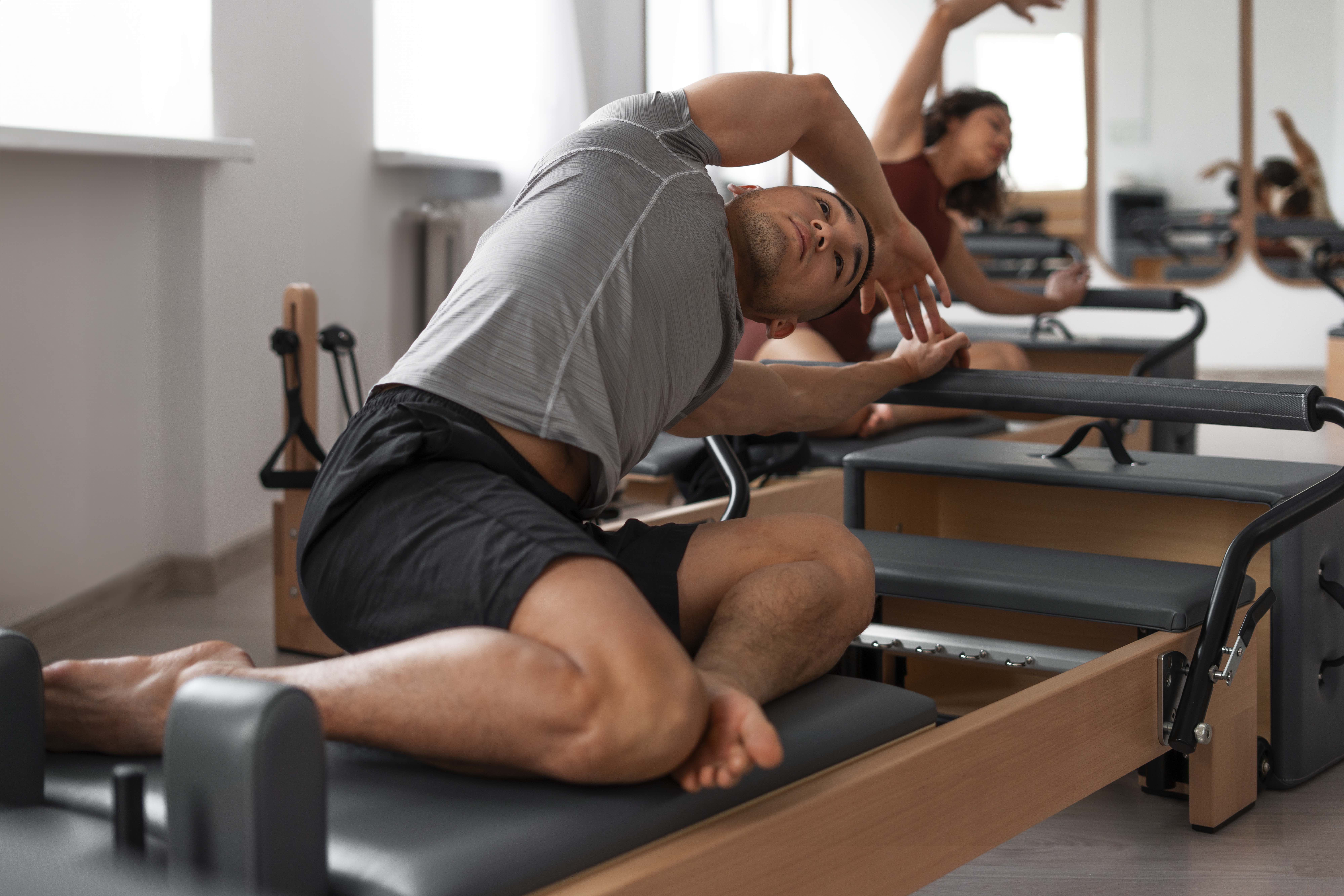
Pilates for men is rapidly shifting from niche to necessity, especially for those dealing with tight hips, back pain, or desk-related stiffness. At The Pilates Clinic in Wimbledon, reformer Pilates for men is used to improve mobility, core strength, and long-term injury resilience—backed by emerging research and real-world clinical results.


Follow us on Social media


