


Supporting Women’s Health: Pilates and Everyday Wellbeing
Women often arrive at our clinic with a familiar story. Persistent back or pelvic pain that hasn’t fully resolved. A sense of core weakness after pregnancy. Leaking during exercise, discomfort during daily movement, or stiffness that worsens with hormonal changes.
Women’s health Pilates supports issues like back or pelvic pain, postnatal core weakness, and bladder leakage by rebuilding strength, coordination, and control with safe, evidence-based exercise. In a clinical setting, sessions are tailored to your stage of life and symptoms, integrating rehab principles to improve movement confidence without overloading the body.
Many women arrive at our clinic with a familiar story: persistent back or pelvic pain that hasn’t fully resolved, a sense of core weakness after pregnancy, leaking during exercise, discomfort in daily movement, or stiffness that worsens with hormonal changes. Too often, they have been told these symptoms are “normal” and something to tolerate.
From a clinical perspective, they are not inevitable. Women’s bodies undergo significant physiological change across the lifespan, and those changes deserve informed, evidence-based movement support. That is where a rehabilitative Pilates framework becomes valuable. Rather than pushing through, we focus on restoring strength, coordination, and confidence with the right progressions at the right time.
At The Pilates Clinic, we work with women at every life stage. Our approach integrates contemporary physiotherapy principles with Pilates-based rehabilitation to address the unique musculoskeletal, pelvic, and hormonal influences on women’s health.
Understanding Women’s Musculoskeletal Health
Women experience a higher prevalence of certain musculoskeletal conditions than men, including pelvic girdle pain, knee osteoarthritis, and persistent low back pain. Hormonal fluctuations, joint structure, connective tissue differences, and life events such as pregnancy and menopause all contribute to how load is managed through the body.
Hormones, connective tissue, and joint stability
Oestrogen plays a role in collagen metabolism and ligament elasticity. Changes in oestrogen levels during the menstrual cycle, postpartum period, or menopause can influence joint laxity and tissue recovery. This is why exercise selection and progression need to be appropriate and informed.
Pilates allows us to:
- Improve neuromuscular control around joints
- Enhance load distribution through the spine and pelvis
- Build strength without relying on excessive joint stress
Research published in the British Journal of Sports Medicine highlights that neuromuscular training programmes focused on strength, balance, and movement control can significantly reduce the risk of knee and lower-limb injuries in women by improving joint stability and movement patterns, particularly at the hip and knee.
Pelvic Floor Health: Beyond Kegels
Pelvic floor dysfunction affects a significant proportion of women, yet it is still under-discussed. Symptoms may include urinary leakage, pelvic heaviness, pain with intercourse, or difficulty engaging the core during movement.
Why isolated strengthening is not enough
Contrary to popular belief, pelvic floor health is not simply about doing more contractions. The pelvic floor functions as part of a pressure management system alongside the diaphragm, deep abdominal muscles, and spinal stabilisers.
At The Pilates Clinic, we assess:
- Breathing mechanics
- Ribcage and thoracic mobility
- Coordination between the pelvic floor and deep core muscles
Pilates exercises are then prescribed to integrate pelvic floor function into whole-body movement. The NICE guideline recommends encouraging pelvic floor muscle training for women of all ages because it helps prevent symptoms of pelvic floor dysfunction and should be continued long-term.
For many women, this integrated method leads to improved continence, reduced pelvic discomfort, and greater confidence during daily and recreational activities.
Pregnancy and Postnatal Rehabilitation
Pregnancy places unique mechanical demands on the body. Changes in posture, abdominal wall tension, and pelvic alignment are normal, but how these changes are supported can influence recovery long after birth.
Supporting the body during pregnancy
Evidence-based prenatal Pilates focuses on:
- Maintaining spinal and pelvic mobility
- Supporting postural adaptations without overload
- Encouraging efficient breathing and circulation
Movements are adapted to trimester-specific needs, with close attention to fatigue, balance, and joint stress.
Postnatal recovery and core function
Postnatal rehabilitation is not about “getting back” quickly. It is about restoring function safely. Conditions such as diastasis recti, pelvic girdle pain, or ongoing pelvic floor symptoms require structured progression.
Pilates offers:
- Gradual reloading of the abdominal wall
- Re-establishment of lumbopelvic control
- Safe return to impact or higher-load activities where appropriate
Menopause, Bone Health, and Long-Term Strength
Menopause is often associated with reduced bone density, changes in body composition, and increased joint stiffness. However, movement remains one of the most powerful tools for preserving musculoskeletal health during this stage of life.
Pilates and bone health
While Pilates is not a replacement for all weight-bearing exercise, Pilates can:
- Improve balance and coordination, reducing fall risk
- Support spinal alignment and posture
- Build strength around vulnerable joints
When combined with progressive loading strategies, Pilates-based rehabilitation can form part of a comprehensive approach to bone health.
Managing pain and stiffness
Many women report increased joint discomfort during perimenopause and menopause. Gentle, controlled movement helps maintain joint nutrition and reduces fear-avoidance behaviours that often worsen pain over time.
A Thoughtful, Rehabilitation-Informed Pilates Approach
Not all Pilates is the same. When Pilates is taught with a strong understanding of anatomy, biomechanics, and common rehabilitation principles, it can play a valuable role in supporting women’s health at different stages of life.
At The Pilates Clinic, our Pilates sessions are informed by contemporary movement science and physiotherapy-aligned principles. We take a considered approach to movement, recognising that pain history, previous injury, pregnancy, menopause, and everyday load all influence how the body moves and adapts.
Our instructors prioritise:
- Understanding each client’s movement history and current needs
- Being attentive to symptoms such as pain, discomfort, or instability
- Adapting exercises to suit individual capacity, confidence, and progression
This approach helps ensure Pilates sessions are supportive, effective, and appropriate, rather than generic or overly prescriptive.
Individualised rather than one-size-fits-all
Group Pilates classes can be a supportive and motivating way to move, and for many people they form an important part of a regular movement routine. However, women’s bodies and movement histories vary, and some individuals may have additional considerations that benefit from a more personalised approach.
These can include:
- Pelvic floor symptoms or changes
- Joint hypermobility or reduced stability
- Recovery following surgery or injury
- Ongoing or recurring musculoskeletal pain
By adjusting exercises and progressing them gradually, Pilates can remain responsive to the individual rather than following a fixed template. This flexibility supports long-term movement confidence and helps women feel more connected to their bodies over time.
At The Pilates Clinic, our focus is on encouraging safe, informed movement within both group and more personalised settings, supporting strength, coordination, and resilience in everyday life.
The Evidence Behind Pilates for Women’s Health
A growing body of research supports Pilates-based rehabilitation for women across different health contexts.
Studies in physiotherapy and sports medicine journals show that Pilates can:
- Reduce chronic low back pain
- Improve functional movement and balance
- Enhance quality of life when supervised appropriately
Pilates-based exercise has been shown to support improvements in pain and function in people with persistent low back pain, particularly when programmes are adapted to the individual. When guided by trained professionals, Pilates can support the transition from rehabilitation towards confident, long-term self-management of movement.
Moving Forward with Confidence
Women’s health is not static. It evolves across the lifespan and is influenced by hormonal changes, life events, and individual biomechanics. Pain, weakness, or a loss of confidence in movement should not be dismissed as something women simply have to live with.
A well-informed Pilates approach can offer structured, evidence-based movement support through these changes. By focusing on strength, coordination, and control, Pilates can help women reconnect with their bodies and move with greater confidence over time.
At The Pilates Clinic, we believe informed, person-centred care is essential. If you are experiencing persistent discomfort, pelvic floor symptoms, or want to feel more confident moving through pregnancy, menopause, or everyday life, a guided Pilates programme may be a helpful next step.
Our approach is not about pushing harder. It is about moving with greater awareness and support, in a way that respects both the body’s physiology and individual experience.
If you would like to explore Pilates in a supportive, welcoming environment, you can learn more about our group classes and personalised sessions at The Pilates Clinic.


Chronic pain and poor sleep often go hand in hand. Research shows that reformer Pilates can help reduce pain, improve movement confidence, and support better sleep quality, helping to break the cycle and improve everyday wellbeing.

Teaching since 2000 First studio in 2002 Opening Wimbledon in 2012 BASI Faculty role Why rehabilitation matters Success stories How Pilates has evolved
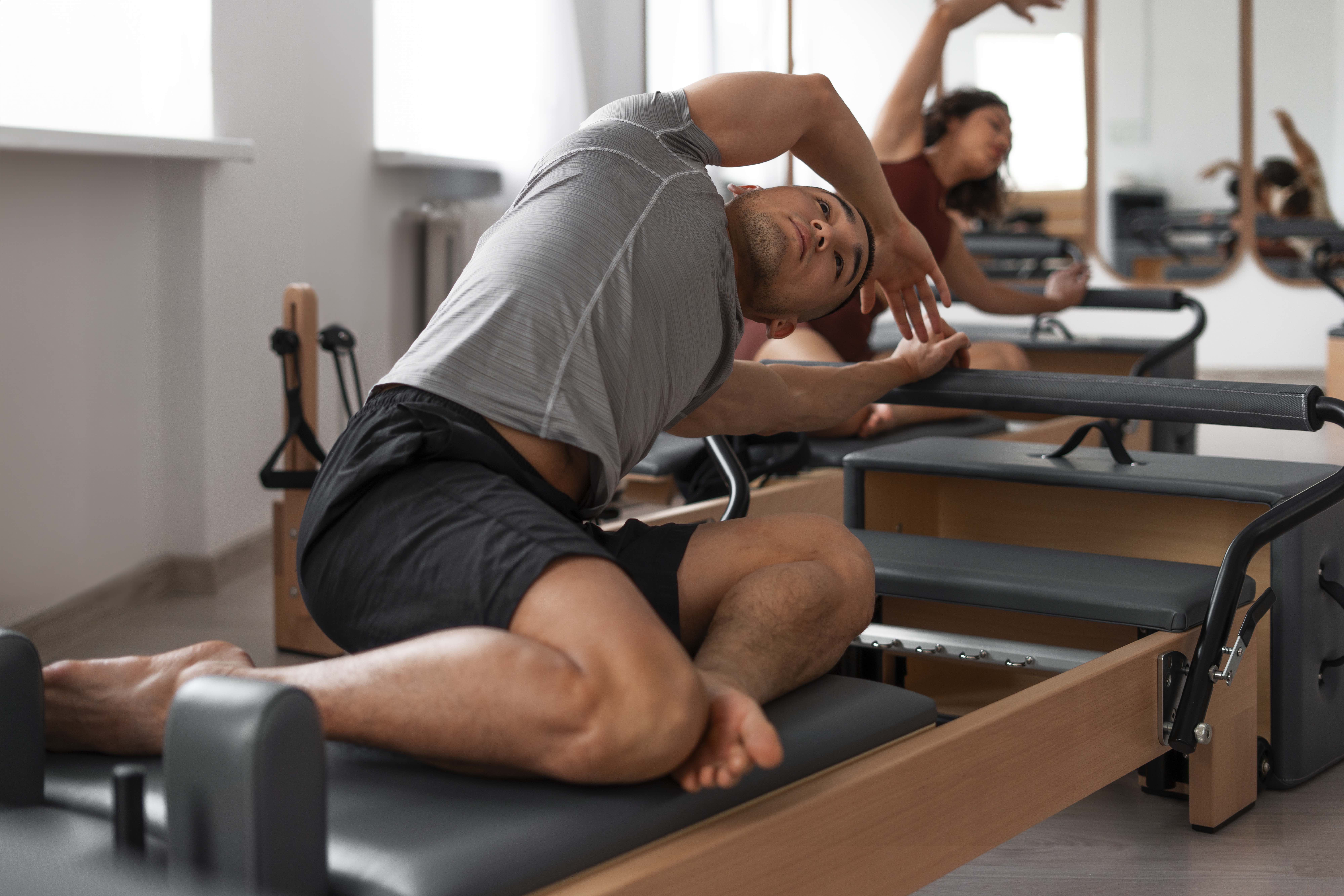
Pilates for men is rapidly shifting from niche to necessity, especially for those dealing with tight hips, back pain, or desk-related stiffness. At The Pilates Clinic in Wimbledon, reformer Pilates for men is used to improve mobility, core strength, and long-term injury resilience—backed by emerging research and real-world clinical results.


Follow us on Social media


