


Pilates for Beginners
Staying safe is extremely important to me, and of course to you, so please watch this quick clip to make sure you assist me in keeping you safe.
Pilates for Beginners: The Ultimate Safety & Precaution Guide
Pilates is a globally renowned movement system celebrated for its ability to build deep core strength, enhance spinal mobility, and cure postural imbalances. However, because it relies on precise biomechanics, the margin for error can be small when you are just starting out.
Whether you are working out at home during a holiday or attending a session in our Wimbledon studio, understanding safety precautions is essential to avoid injury and ensure your workouts remain effective.
Medical Disclaimer: This guide provides educational information and safety strategies based on the BASI Pilates method. It is not a substitute for professional medical advice. If you have chronic lower back pain, joint conditions, are pregnant, or are recovering from surgery, consult your physician before starting a new exercise program.
1. The Core Golden Rule: Quality Over Quantity
The most common mistake beginners make is treating Pilates like a traditional high-intensity gym workout. Speed and high repetitions are not the goals here.
The Problem with Momentum
When you move quickly through exercises like the Hundred or the Roll-Up, you rely on momentum rather than muscular control. This completely bypasses the deep stabilizing muscles—such as the transversus abdominis (your deep core corset muscle)—and transfers the physical strain directly into your lower back and hip flexors.
Signs of Muscle Fatigue
In Pilates, we look for precision. Doing three repetitions with perfect form is significantly more beneficial than grinding out fifteen sloppy ones. Watch out for these indicators that your stabilizers have turned off:
- Your stomach domes or pushes outward during an abdominal curl instead of drawing inward.
- Your lower back starts arching off the mat when you move your arms or legs.
- Your shoulders begin creeping up toward your ears.
If you experience any of these signs, stop, reset, and take a brief rest.
2. Navigating the Spine: Neutral vs. Imprinted
Understanding how to align your pelvis and lower back is your best insurance policy against workout-induced back pain.
What is Neutral Spine?
A neutral spine maintains the natural curves of your back. When lying flat on your back with your knees bent, there should be a tiny, natural gap between your lower back and the mat—just enough space for a small grape to sit safely beneath it without getting crushed. Your hip bones and pubic bone should form a flat, level plane parallel to the floor.
What is an Imprinted Spine?
An imprinted spine involves slightly tilting your pelvis back to gently press your lower back down into the mat. This is not an aggressive squeeze of your glutes; it is a subtle engagement of your obliques to support the weight of your legs.
The Precautionary Takeaway
As a beginner, if both of your feet are lifted off the floor (a position known as "tabletop"), your core may not yet be strong enough to maintain a neutral spine safely.
Actionable Tip: If you feel your lower back pulling or arching away from the mat, immediately modify by shifting into an imprinted spine or lowering one foot to the floor to reduce the load.
3. Protecting Your Vulnerable Zones
Certain areas of the body are more prone to strain when your core is still building foundational strength.
The Cervical Spine (Your Neck)
Beginners frequently complain of neck pain during upper-body flexion exercises. This happens because the large muscles at the front of the neck take over when the deep core fails to support the weight of the head.
- The Fix: Think of gently nodding your chin as if holding a small peach between your chin and throat before lifting your upper body. Look toward your thighs, not the ceiling.
- The Modification: If your neck aches, place one hand behind your head for support, or lower your head back down to the mat entirely. You will still get an excellent abdominal workout without straining your neck.
The Lumbar Spine (Your Lower Back)
Exercises that involve lowering your legs toward the floor (like Leg Lowers or Double Leg Stretch) place a heavy lever load on your pelvis.
- The Fix: Never lower your legs so far down that your belly domes or your lower back arches.
- The Modification: Keep your legs angled higher toward the ceiling (at a 60-degree or 90-degree angle) or keep your knees bent.
4. Clinical Accommodations for Specific Conditions
If you are navigating specific health challenges, generic Pilates exercises must be modified to keep your body safe.
Osteoporosis and Osteopenia
If you have low bone density, structural safety is crucial.
- Precautions: Avoid deep spinal flexion (forward rounding, like the Roll-Up or Spine Stretch Forward) and forced spinal rotation.
- Safe Approach: Focus heavily on neutral spine exercises, gentle spinal extension (back strengthening), and hip stability work.
Herniated or Bulging Discs
Spinal pressure must be strictly managed to prevent exacerbating a disc injury.
- Precautions: Avoid forward flexion exercises, especially when combined with twisting movements.
- Safe Approach: Work primarily in a supported neutral spine alignment, and use modifications that avoid deep folding at the waist.
Hypermobility Spectrum Disorders
If you have naturally loose joints, your body can easily overshoot a safe range of motion.
- Precautions: Avoid "locking out" your elbows or knees during movements like the Plank or Quadruped (hands and knees) balances.
- Safe Approach: Focus on muscle engagement and control before exploring the end of your flexibility range. Think about building strength, not stretching further.
Frequently Asked Questions (FAQ)
Should Pilates cause lower back pain?
Absolutely not. If you experience lower back pain during or after a session, it is a clear indicator that your deep core stabilizers have stopped engaging and your lower back muscles are overworking to compensate. Lower your leg angles, decrease your range of motion, or transition to an imprinted spine.
Is it safer to start with Mat Pilates or Reformer Pilates?
Both setups offer unique safety benefits. Mat Pilates uses your own body weight, making it easier to learn foundational movements at your own pace. The Reformer uses springs and pulleys; while this adds resistance, the machine's rigid frame can actually help guide your joints through a safe, controlled track of motion.
How many times a week should a beginner practice Pilates?
For optimal results and a safe physical progression, aim for 2 to 3 times per week. This cadence gives your nervous system and muscle fibers enough time to recover, adapt, and build memory between your sessions.
Can I do Pilates if I am pregnant?
Yes, but you must implement specific structural modifications. During the second and third trimesters, you should avoid lying flat on your back for prolonged periods to prevent vena cava compression. You should also avoid deep twists and intense abdominal crunching. Always work with a certified prenatal instructor.
Personalized, On-the-Go Support
Fitness is never one-size-fits-all. Our online video library is built specifically to keep your practice safe and aligned when you are away from the studio.
If an exercise in our library feels uncomfortable or unsuited to a specific physical condition you are navigating, simply reach out to us. We build and upload custom video modifications tailored specifically to your needs, ensuring you always have an expert-guided alternative right at your fingertips.
Staying safe is extremely important to me, and of course to you, so please watch this quick clip to make sure you assist me in keeping you safe.
Your Pilates Videos
These pilates videos are for your workouts when you are away on holiday. These are for you to request personalised pilates workouts for specific issues you are dealing with.
Email me requests and I will make them and upload them with an explanation on each one (and your name on it if you choose), and everyone who is a member can have access to all the clips that go up.


Chronic pain and poor sleep often go hand in hand. Research shows that reformer Pilates can help reduce pain, improve movement confidence, and support better sleep quality, helping to break the cycle and improve everyday wellbeing.

Teaching since 2000 First studio in 2002 Opening Wimbledon in 2012 BASI Faculty role Why rehabilitation matters Success stories How Pilates has evolved
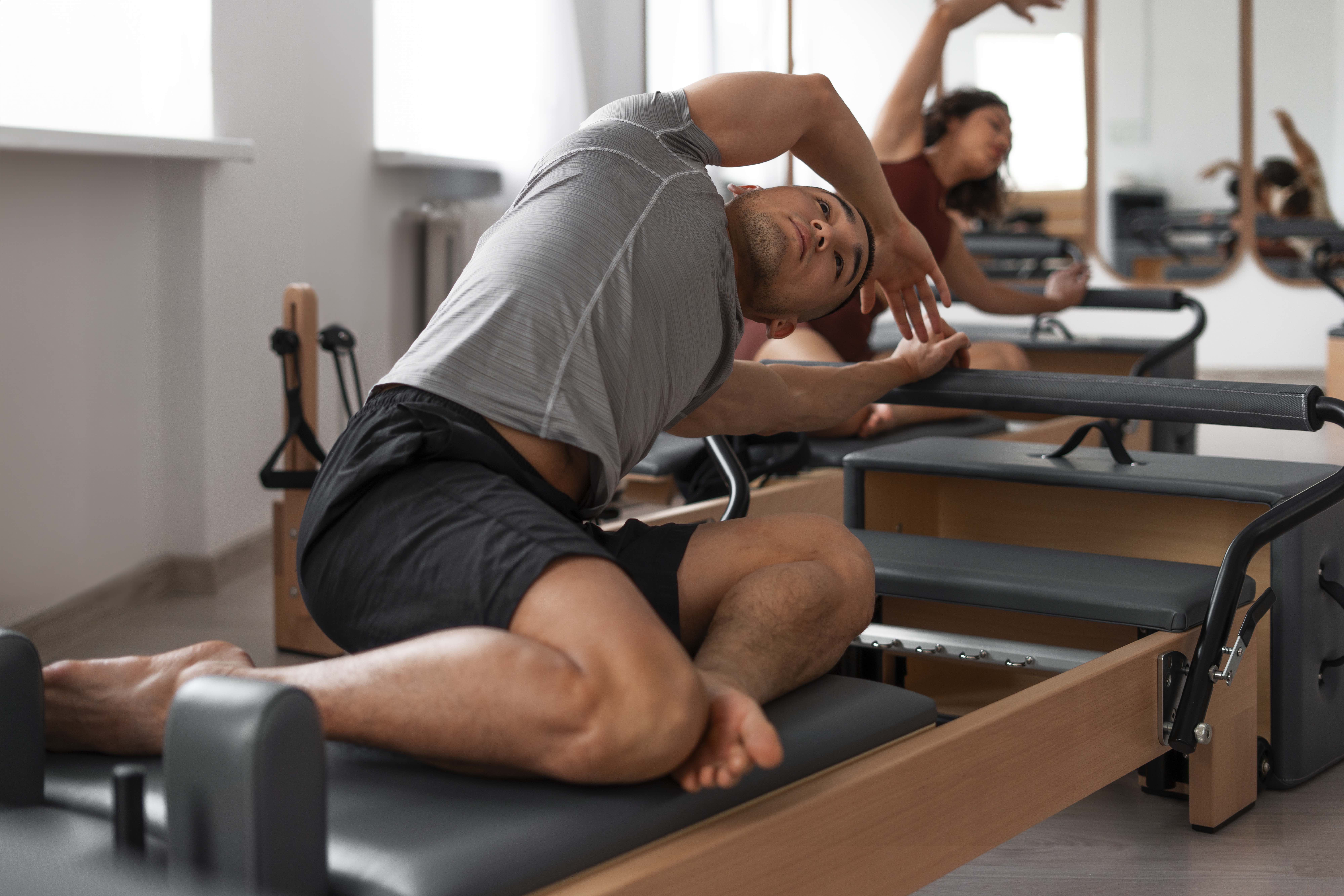
Pilates for men is rapidly shifting from niche to necessity, especially for those dealing with tight hips, back pain, or desk-related stiffness. At The Pilates Clinic in Wimbledon, reformer Pilates for men is used to improve mobility, core strength, and long-term injury resilience—backed by emerging research and real-world clinical results.


Follow us on Social media


