


Pilates for Runners
Pilates is amazing at isolating and strengthening individual muscle groups which is essential for balance within the body in all meaning of the word.
Some of you may know me and know of my passion for running.
I didn't always love to run, but I found that after having children I embraced the time I spent running for the headspace it gave me and for helping get my body back into shape.
Soon after, my motivations changed as I started to set bigger challenges for myself: 5K, 10K, half marathon, and full marathon
There is real satisfaction in focused and committed training that pays off in a personal best or simply a comfortable race where you cross the line feeling good to go again.
How Pilates Helped Me Stay Injury Free
In the early days of my running efforts, I had many familiar running injuries including ankles, knees, and lower back pain. These injuries are not only painful but frustrating when you are trying to train and achieve your goals.
Fortunately for me, I found Pilates and started seeing and feeling the benefits, not just in my post baby body but also in my running.
Fast forward to now where Pilates is a part of daily life for me and I have (now I'm tempted to whisper this bit lest I tempt fate!) none of the regular running injuries I experienced in the early days.
With the exception of two weeks ago when, whilst running, I thought it would be fun to hurdle a fallen tree blocking my path!
I had visions of parkour and free running, gracefully jumping over this tree and continuing my run with elegance and ease.
I leapt.
I landed.
And did something far from elegant, I'm sure.
I had given myself a little jolt, leaving me with a bit of lower back pain.
The upside of that story is I was back to running after just a few days, knowing the right exercises to be kind to my body and repay it for its efforts.
Why Pilates Works for Runners
Pilates works at balancing the body and creating effective, functional movements.
We do this by strengthening all of the muscles responsible not just for the large movements we make, but also for the stabilising actions that not only protect us from injury but make our movements more efficient and powerful.
Understanding Common Running Injuries
For example, many runners experience knee pain.
There can be many reasons for this and in different parts of the knee. Often, however, the causes generally revolve around poor tracking of the patella (kneecap) and/or overloading the joint through the repetitive and high impact nature of running.
Incorrect tracking of the patella can happen due to muscle imbalances. One example is that the outer quadriceps are often overdeveloped compared to the inner quadriceps, causing the patella to be pulled towards the dominant muscle.
As this muscle tightens, the symptoms worsen, causing pain and injury.
This sort of imbalance is addressed in Pilates and can be remedied in such a scenario by working at balancing the relevant muscle groups.
Pilates is amazing at isolating and strengthening individual muscle groups which, sorry to be repetitive folks, is essential for balance within the body in every sense of the word.
Building Better Body Awareness
Pilates also greatly improves body awareness.
We talk about a mind body connection, which ultimately means we are in complete conscious control of our body's movements.
Joseph Pilates did, after all, name his exercise regime Contrology.
What this means for running is that, firstly, we are more efficient in our use of muscles and, secondly, we are more aware of how our body is feeling and moving.
We notice sooner if we are at risk of injury and are able to address the area of concern before it turns into an injury and halts our training.
Core Strength Is More Than Abs
There is much talk of core strength, and this means different things to different people.
A common misconception is that this is exclusive to the abdominal muscles.
However, we must not forget the multitude of muscles that hold us upright. We should be thinking equally of the back of our bodies, not just the front.
In modern life we are often rounded forward (in flexion), for example looking at screens as I am doing now while writing this.
Then, when exercising, we often think, "Best work the abs!"
Although important, this needs to be balanced with working the back of our bodies including our back muscles (oh so very many neglected back muscles!), the triceps, and the hamstrings.
If we get this balance right, we hold ourselves upright instead of stooping or shuffling.
This is very relevant to running, keeping us moving forward rather than downwards.
By holding our spine in its neutral curves, we take advantage of its natural ability to absorb shock, reducing the load on the knees, hips, and lower back.
We are also able to breathe more efficiently by creating more space in the body for the diaphragm, lungs, and intercostal muscles to contract and expand well.
This enables more oxygen to be delivered to the muscles, which in turn can help prevent stitch, reduce cramping, delay fatigue, and enhance performance.
Final Thoughts
I think I could go on and on about the injury prevention and performance enhancing qualities of Pilates for runners, and I know for sure that I will have missed something out.
What I want to leave you with is this:
We tend to look to marginal gains to improve performance and prevent injury, myself included, such as the correct trainers, compression socks, cooling or warming kit, heart monitors, fancy watches, and so on.
But our biggest assist is our own body and learning how to harness and utilise the best from ourselves.
Pilates is not a marginal gain. It is a major one.
- Pilates will help prevent injury if you commit to it regularly.
- Pilates will help you recover from injury.
- Pilates is what your body wants for running and for life.
Frequently Asked Questions (FAQs)
1. Can Pilates help prevent running injuries?
Yes. Pilates strengthens stabilising muscles, improves movement patterns, and helps correct muscle imbalances that can contribute to common running injuries.
2. Is Pilates beneficial for beginner runners?
Absolutely. Whether you're training for your first 5K or preparing for a marathon, Pilates can improve strength, flexibility, posture, and body awareness to support your running.
3. How often should runners do Pilates?
Consistency is key. Practising Pilates two to three times per week can complement your running training and support injury prevention and recovery.
4. Can Pilates help with knee and lower back pain from running?
Pilates focuses on strengthening the muscles that support the knees, hips, and spine. It can help improve alignment, movement efficiency, and overall stability.
5. Will Pilates improve my running performance?
Yes. Better core strength, improved posture, increased body awareness, and more efficient breathing can contribute to improved running form, endurance, and performance.
Ready to Run Stronger?
Whether you're training for your first race or aiming for a new personal best, Pilates can help you move better, recover faster, and stay injury free.
Book a Pilates class today and discover how regular Pilates practice can support your running goals and your everyday wellbeing.


Chronic pain and poor sleep often go hand in hand. Research shows that reformer Pilates can help reduce pain, improve movement confidence, and support better sleep quality, helping to break the cycle and improve everyday wellbeing.

Teaching since 2000 First studio in 2002 Opening Wimbledon in 2012 BASI Faculty role Why rehabilitation matters Success stories How Pilates has evolved
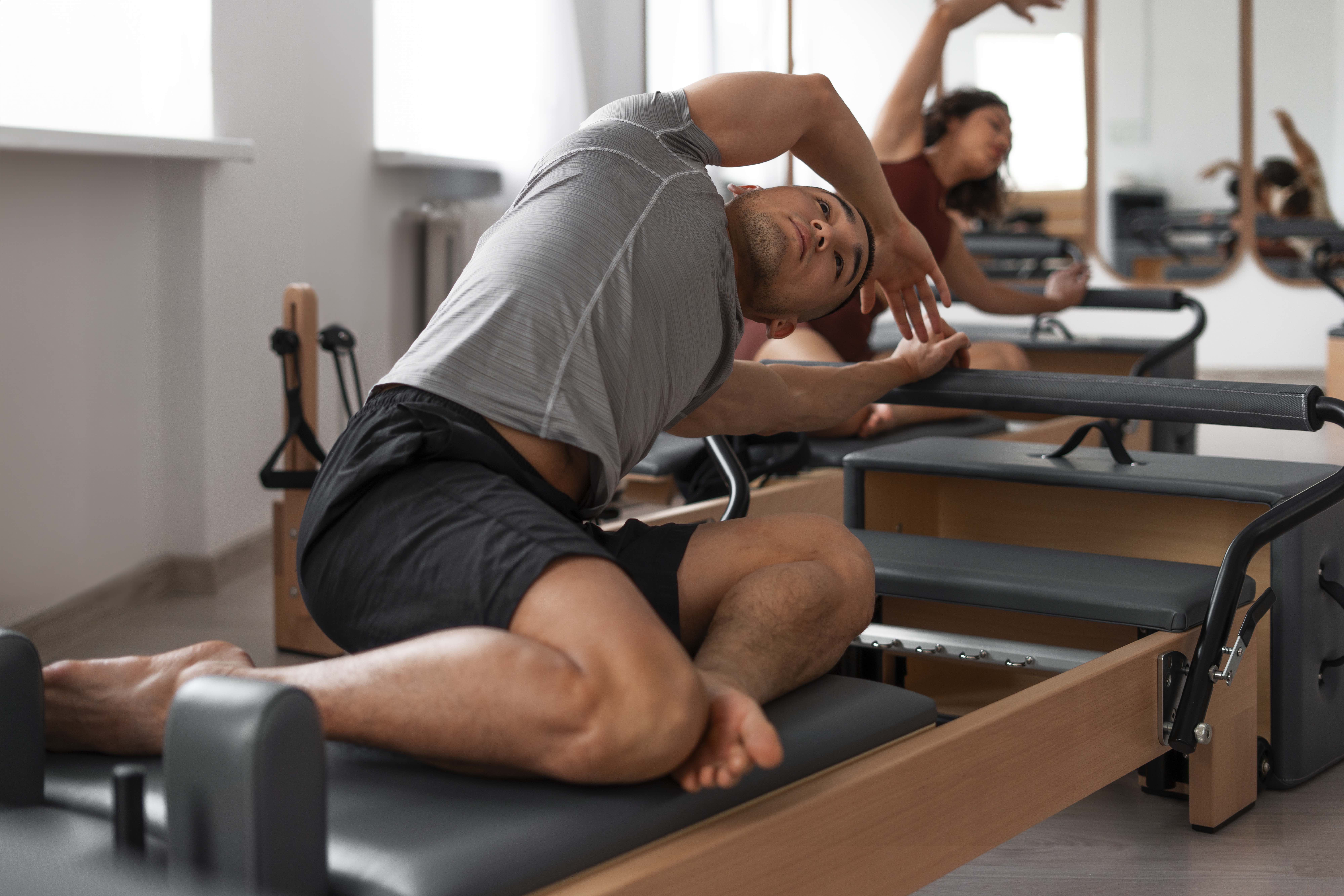
Pilates for men is rapidly shifting from niche to necessity, especially for those dealing with tight hips, back pain, or desk-related stiffness. At The Pilates Clinic in Wimbledon, reformer Pilates for men is used to improve mobility, core strength, and long-term injury resilience—backed by emerging research and real-world clinical results.


Follow us on Social media


