


Pilates During Christmas: Stay Strong Without Burning Out
Christmas is a tricky time for the body. Between the cold, the travel, the long stretches of sitting on low sofas, and the general disruption to routine, most people lose mobility before they lose fitness. That stiffness and soreness is what makes January training feel like punishment.At The Pilates Clinic, we are qualified Pilates instructors and we know that Christmas is not the time to overhaul your body; it is the time to stop it from falling apart.
Why Your Body Needs Intelligent Movement This December
Pilates helps you stay mobile and pain-free in December by keeping your spine moving, hips strong, and posture supported despite cold weather, travel, and long periods of sitting. A few short, controlled sessions each week can reduce stiffness now and make returning to training in January feel easier and safer.
Christmas is a tricky time for the body. Between the cold, the travel, long stretches of sitting on low sofas, and the general disruption to routine, most people lose mobility before they lose fitness. That stiffness and soreness is what makes January training feel like punishment.
At The Pilates Clinic, we are qualified Pilates instructors and we know that Christmas is not the time to overhaul your body; it is the time to stop it from falling apart.
Pilates shines here. It's not a demanding "get fit quick" plan, but a clinical strategy to keep your spine mobile, your hips strong, and your body organised, quiet, and pain-free through the end of the year. If you want to arrive in January feeling capable and ready, incorporating mindful, controlled Pilates is your smartest choice right now.
The Biggest Mistake We See: Stopping Completely
When schedules fall apart in December, many people decide to "rest" entirely. Unfortunately, the body does not interpret sudden stillness as rest. It often interprets it as a prompt to seize up.
When you stop moving, a few things happen very quickly:
- Hips Tighten: Prolonged sitting over long dinners or on flights shortens the hip flexors, pulling on the lower back.
- Joints Complain: Joints require movement to circulate nourishing synovial fluid. Stillness leads to that "stiff and crunchy" feeling.
- Core Stability Declines: Your deep stabilising muscles rely on endurance. Even a two-week break can significantly diminish their capacity to support your spine when you lift heavy shopping bags or reach for decorations.
Maintaining function is always easier than fighting to regain it. Our focus during this time is providing targeted, low-impact exercise that directly counters these effects.
Structuring Your December Practice: Consistency is Your Goal
This is the season to shift your focus from progression to preservation. Intensity is out; consistency and quality are in. Trying to squeeze in high-intensity workouts when your sleep is poor is a fast track to burnout.
Here is our advice for December movement:
- Maintenance Minimum: Once Per Week. This is the non-negotiable threshold. A single, focused session is enough to cue the nervous system and move every major joint through its range. Think of it as an essential "body anchor."
- Optimal Preservation: Twice Per Week. This is the sweet spot. Two sessions allow you to focus on different elements, perhaps one day for spinal mobility and hip strength, and the second for posture and foot stability.
- Only If Energy is Solid: Three Times Per Week. Only attempt this if your sleep quality and energy levels are genuinely high. Consistency and quality are what matter most in December, not frequency.
The key takeaway: More is not better in December. Consistency is.
The Clinical Focus: What Your Session Should Achieve
A good Christmas Pilates session is not about sweat; it's about intelligent restoration and control. We focus on areas that suffer the most from seasonal changes:
1. Counteracting the Slouch: Spinal Mobility
We aim to undo the effects of slouching on the sofa or hunching over devices. Exercises like Cat-Cow or Spine Stretch ensure your vertebrae remain mobile and well-nourished.
Clinical Insight: Promoting thoracic extension (opening the chest) is critical. Shallow breathing, often linked to stress and poor posture, impacts core stability and neck tension. Deep, three-dimensional breathing, integrated into movement, is key, as the NHS confirms its importance for reducing stress.
2. Protecting the Lower Back: Hip Strength and Flexibility
If your hips are tight and your glutes are weak, your lower back will take the strain—a common cause of holiday flare-ups.
- We use targeted work like Shoulder Bridge or Footwork on the reformer to maintain the crucial balance between the front and back of the pelvis.
- We use controlled stretching to lengthen shortened hip flexors.
Why Specialised Pilates Equipment is Ideal Now
Traditional Mat Pilates can be demanding because you are lifting your entire body weight against gravity. On a low-energy day, this can feel overwhelming.
This is where clinical Pilates equipment such as the reformer proves its immense value during the holiday period.
Support and Customisation
The spring system on the equipment allows for unparalleled customisation, making it the perfect tool for maintenance:
- Assisted Movement: By using heavier springs, the equipment can assist you (for example, helping you lift your head and chest in an abdominal curl). This allows you to access deeper core muscles without over-taxing a fatigued nervous system.
- Targeted Resistance: Springs provide controlled, continuous tension, which is far superior for maintaining muscle tone and length compared to simply moving joints passively.
- Safety and Feedback: Lying on the carriage provides immediate, clear feedback, helping you maintain perfect, pain-free alignment. This controlled environment is why studies, like those reviewed by Cochrane, show strong evidence supporting equipment-based Pilates for conditions like chronic lower back pain.
The ability to adjust resistance means your session can match your energy level, ensuring you still get a deeply effective, therapeutic workout even when you feel tired.
The Pre-Christmas Advantage: Momentum is Key
The common refrain is, "I'll start Pilates in January." But January motivation often outstrips January capacity. Starting a complex, mind-body discipline when you are also battling post-holiday fatigue and returning to work is a recipe for failure.
Starting before the end of the year offers tangible, clinical benefits:
- Motor Learning: Your body already understands the movements and the language. The learning curve happens when you have the mental space for it, meaning January sessions feel productive, not overwhelming.
- Injury Prevention: You avoid the typical "first-week soreness spiral." More importantly, pre-emptive strengthening ensures you enter the new year with a stable core, significantly reducing the risk of a new injury.
- Guaranteed Slot: January classes fill fast. Securing a consistent weekly reformer Pilates slot now and protecting it through the holiday period ensures continuity.
For those near Wimbledon considering a start, we strongly recommend a 1:1 clinical consultation now. This allows our physiotherapists to assess any weaknesses and design a safe, specific sequence that starts your progress before the chaos begins.
Carry Calm Strength into the New Year
The aim of your Pilates practice this month is simple: to preserve your current state of function.
By committing to just one or two consistent, low-stress sessions per week, you are actively insulating your body from the typical festive stiffness and deconditioning. This calm approach ensures your joints stay nourished, your stability remains active, and your nervous system stays balanced.
Choosing mindful, effective movement with clinical Pilates equipment now beats any aggressive, painful 'reset' later. Book your session before Christmas and carry that intelligent momentum into the New Year. Your January self, and your back, will undoubtedly thank you for it.


Chronic pain and poor sleep often go hand in hand. Research shows that reformer Pilates can help reduce pain, improve movement confidence, and support better sleep quality, helping to break the cycle and improve everyday wellbeing.

Teaching since 2000 First studio in 2002 Opening Wimbledon in 2012 BASI Faculty role Why rehabilitation matters Success stories How Pilates has evolved
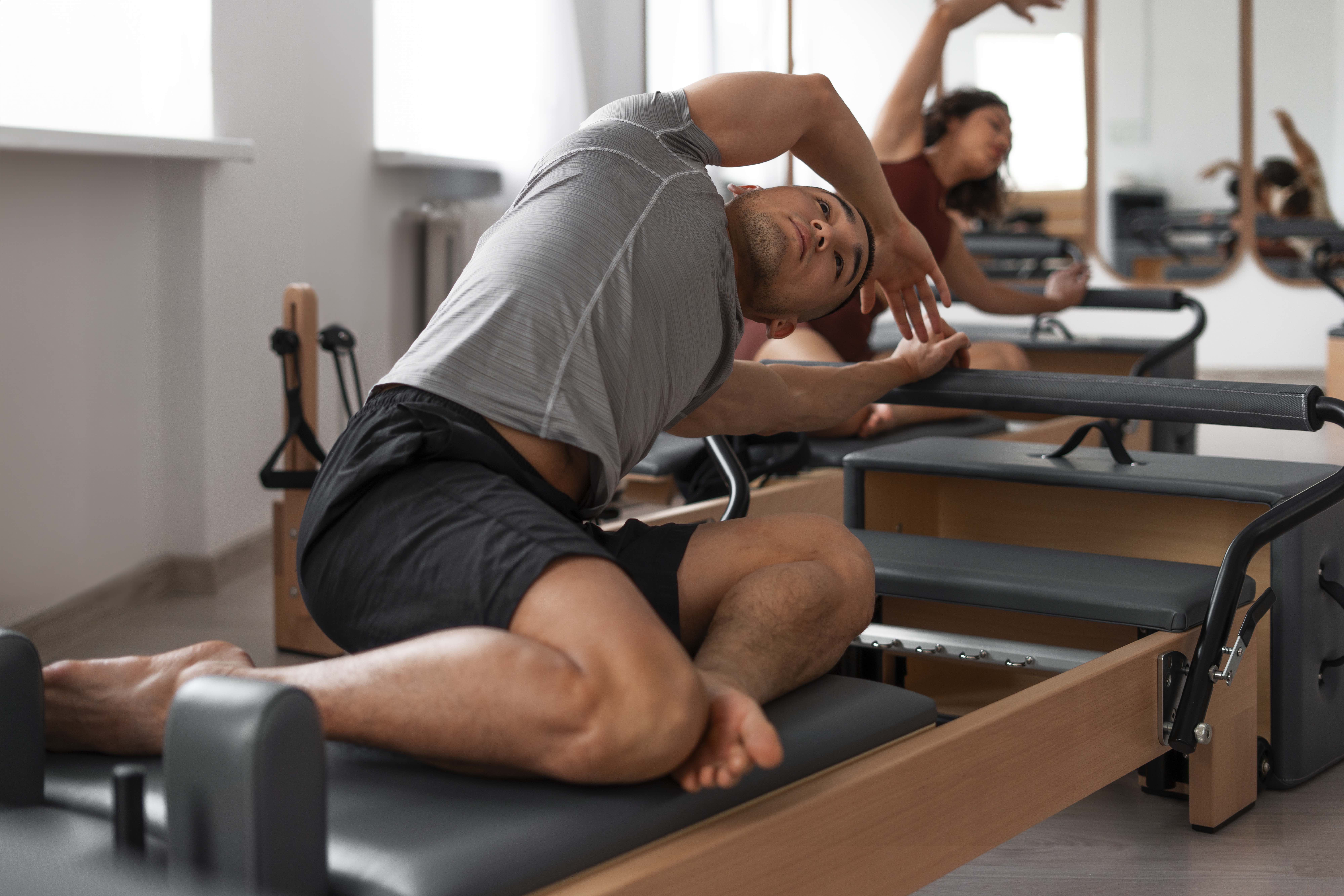
Pilates for men is rapidly shifting from niche to necessity, especially for those dealing with tight hips, back pain, or desk-related stiffness. At The Pilates Clinic in Wimbledon, reformer Pilates for men is used to improve mobility, core strength, and long-term injury resilience—backed by emerging research and real-world clinical results.


Follow us on Social media


