


Pilates for Parkinson’s – Improving Balance & Mobility
Pilates exercise keeps body fit and flexible, and prevents muscles from rapid decline, which can affect sufferers of Parkinson’s
“ I walked into The Pilates Clinic on Elm Grove at noon on a Monday in early January 2013 in a state of shock. My previous appointment had been at St George’s Hospital. My brain and all my emotions were working in overdrive to absorb the news the Doctor had just given me. Rewind several years and I had had a busy job, travelling a great deal, living abroad, and falling victim regularly to crippling back pain without doing much to prevent its recurrence. By 2012 I was 58 years old and beginning the process of preparing for semi retirement, with time on my hands to improve my overall fitness levels. Not long after the closing ceremony for the London Olympics, I resolved to take up Pilates. This should at least help my fitness as well as possibly enabling me to avoid the bouts of backache to which I had been prone.
However before I had fixed on where to do my Pilates I developed a pain in my shoulder and a tremor in my right arm. A friend told me about a wonderful osteopath in Kingston who also practiced acupuncture. So in November 2012 I went to see her. She said she could help with the shoulder, but suggested I went to a neurologist for the tremor. Meanwhile she highly recommended a Pilates teacher called Lisa in Wimbledon for my overall mobility and to strengthen my back.
So I booked to see Lisa early in the New Year. And by coincidence my appointment with the neurologist at St George’s Hospital came up for the same morning, but in time for me to do both in succession. The unwelcome news I received at St George’s was that I had Parkinson’s, a degenerative condition that affects the brain and reduces one’s ability to use muscles normally. It is not fatal and every Parkinson’s sufferer can be affected differently. In my case I needed to maintain my balance, strengthen my muscles, improve my flexibility, work on my posture and improve my core. Lisa, who listened to me with great understanding of my new situation and loads of compassion at how shocked and worried I was, said she could help in all five areas.
Five years on and I have been climbing the stairs to the Pilates Clinic for a weekly session with Lisa (or sometimes with one of her excellent team). As the time has passed I have also taken on other fitness regimes, which complement the Pilates. But I can honestly swear that the hour I spend in Pilates Clinic each week has been the best investment I have made since the beginning of 2013 (or possibly ever)!
Pilates exercise helps me keep my body fit and flexible, and prevents my muscles from the rapid decline, which can affect sufferers of Parkinson’s. I cannot recommend it too highly. My brain is suffering by not producing dopamine, the chemical that tells the muscles how and why to move. But even my diminished brain knows that the weekly sessions of Pilates have been a huge factor in ensuring that I can continue a relatively normal life with as little disruption as possible. And, by the way……my shoulder recovered in a few months………and I don’t get back pain any more either!“
-Martin


Chronic pain and poor sleep often go hand in hand. Research shows that reformer Pilates can help reduce pain, improve movement confidence, and support better sleep quality, helping to break the cycle and improve everyday wellbeing.

Teaching since 2000 First studio in 2002 Opening Wimbledon in 2012 BASI Faculty role Why rehabilitation matters Success stories How Pilates has evolved
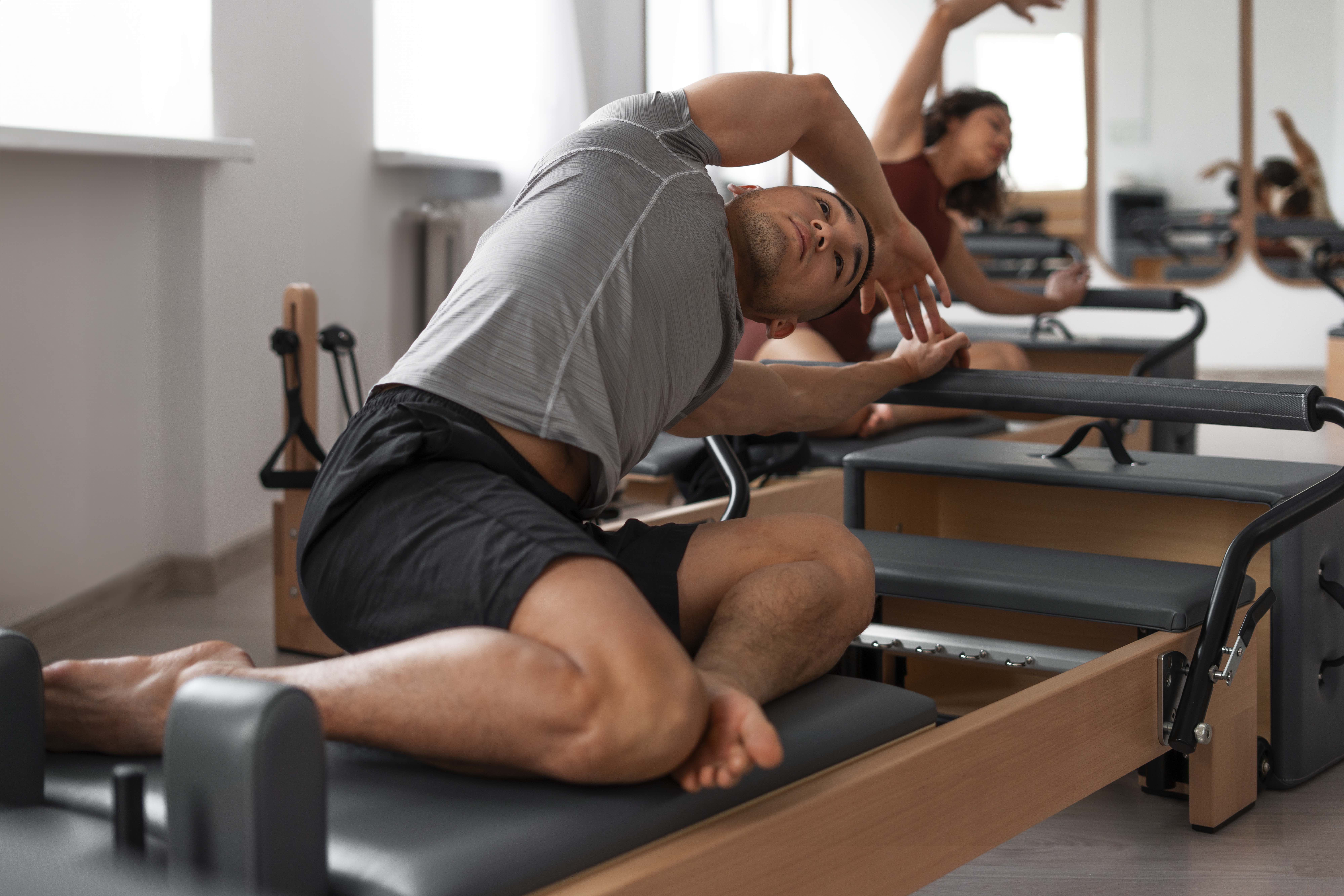
Pilates for men is rapidly shifting from niche to necessity, especially for those dealing with tight hips, back pain, or desk-related stiffness. At The Pilates Clinic in Wimbledon, reformer Pilates for men is used to improve mobility, core strength, and long-term injury resilience—backed by emerging research and real-world clinical results.


Follow us on Social media


