


Pilates and Mental Health at The Pilates Clinic Wimbledon
At The Pilates Clinic in Wimbledon, we witness every day how Pilates supports not only physical health—but mental wellbeing too.
In today’s fast-paced, digitally driven world, stress and overwhelm have become common experiences. Yet amidst the demands of work, family, and modern life, the simple act of intentional movement remains one of the most effective ways to restore balance. At The Pilates Clinic in Wimbledon, we witness every day how Pilates supports not only physical health—but mental wellbeing too.
This Mental Health Awareness Week (19–25 May) invites us to consider the practices that help us cope, stay centred, and reconnect with ourselves. For many of our clients across Wimbledon, Raynes Park, New Malden, Wimbledon Chase, and Southfields, Pilates has become an essential part of that support system.
Why Pilates Supports Mental Wellbeing
Experience
Our instructors and clients regularly share stories of how Pilates has helped them navigate anxiety, fatigue, burnout, and chronic stress. Whether it’s the calm of a morning class or the grounding presence of breath-led movement, Pilates offers a sense of mental reset—a pause from external pressures.
Expertise
A growing body of research supports what practitioners have long known: that mindful, breath-focused exercise contributes meaningfully to mental health. According to the NHS, regular physical activity reduces the risk of depression and can improve sleep, mood, and self-esteem. Pilates, in particular, has been linked with decreased symptoms of anxiety and better psychological flexibility (source: Mental Health Foundation UK).
Unlike high-impact exercise, Pilates emphasises body awareness, alignment, and control. This quiet intensity allows space to breathe, to feel, and to focus—qualities that contribute to both emotional regulation and mental clarity.
Reformer Pilates: Where Strength Meets Stillness
At The Pilates Clinic, we specialise in Reformer Pilates, a method that offers both physical support and mindful challenge. The Reformer apparatus allows movements to be performed with precision and intention, guided by breath and supported by resistance.
Clients often describe Reformer sessions as “moving meditation.” The rhythm of motion, the attention to form, and the sensation of flow create a rare opportunity to slow down and turn inward. For many, this is the first time in their week that they truly switch off.
Whether you’re attending a group Reformer class or a one-to-one private session, the experience is deeply personal—offering both restoration and resilience.
A Studio Rooted in Trust and Community
Authoritativeness
The Pilates Clinic is a fully accredited BASI Pilates studio, aligning with a global standard of excellence in movement education. Our instructors bring years of experience, anatomical knowledge, and trauma-informed awareness to every session.
Trustworthiness
We maintain a strong emphasis on personal connection and consistent care. Our team takes time to understand your needs, goals, and limitations—ensuring you feel safe, supported, and welcomed at every stage of your Pilates journey.
From clients recovering from injury to those returning after burnout or stress leave, our studio has become a sanctuary for people looking not just to move—but to feel well again.
Take the First Step Toward Better Mental Health
If you’re navigating stress, fatigue, or emotional overload, Pilates may offer more than you expect. It’s not about performance or perfection—it’s about presence.
At The Pilates Clinic, we offer a range of mat and Reformer classes for all levels, with instructors who understand the human behind the movement. Whether you live in Wimbledon or nearby areas like Raynes Park or Southfields, our studio is here to support your wellness.
Visit thepilatesclinic.com to book your first class or explore our programme. Your mind and body will thank you.


Chronic pain and poor sleep often go hand in hand. Research shows that reformer Pilates can help reduce pain, improve movement confidence, and support better sleep quality, helping to break the cycle and improve everyday wellbeing.

Since 2000, Lisa Lamberti has built The Pilates Clinic into one of Wimbledon’s most trusted studios, a BASI faculty-led centre with rehabilitation at its core.
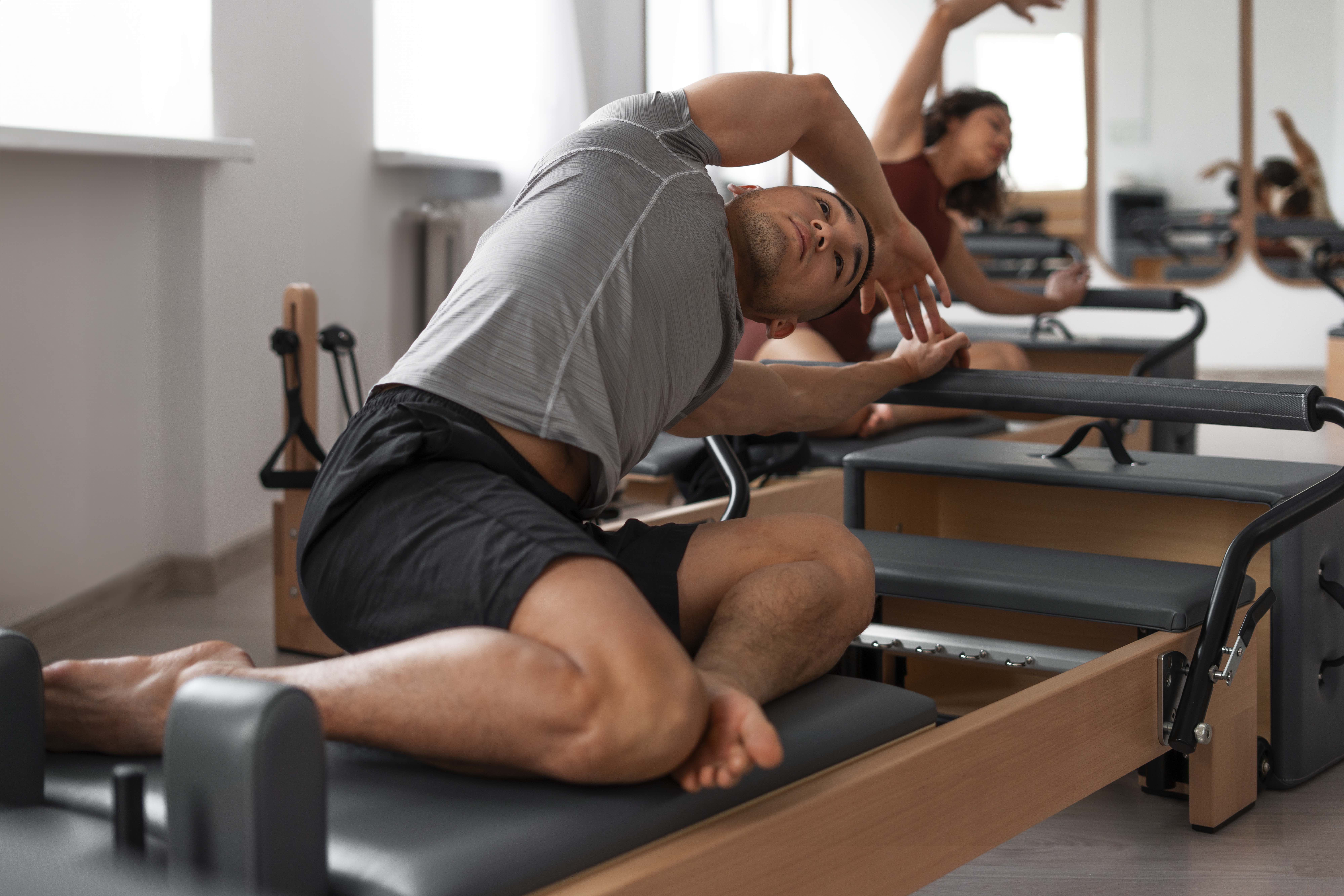
Pilates for men is rapidly shifting from niche to necessity, especially for those dealing with tight hips, back pain, or desk-related stiffness. At The Pilates Clinic in Wimbledon, reformer Pilates for men is used to improve mobility, core strength, and long-term injury resilience—backed by emerging research and real-world clinical results.


Follow us on Social media


