


Desk Posture and Pilates
Pilates focuses on joints that become stiffened throughout the day and helps to improve their range of motion and control.
“For those of you who know me, you’ll know I have a 9-5 job in addition to teaching, so I know a thing or two about being stuck at a desk. Our bodies hate sitting down for prolonged periods, yet we spend on average five years of our lives sat at a desk! Our joints stiffen, muscles become under-utilised, we don’t make efficient use of our musculoskeletal system… all contributing to poor posture and limited flexibility.
This affects us even away from the desk, including headaches, pain in the lower or mid back, stiffness around the shoulders or an ache in the wrist or hand. There’s even an increasingly common condition attributed to desk jobs called ‘Dormant Butt’ Syndrome which is a fancy way of saying our glute muscles have become lazy.
Fortunately, Pilates can help counteract these effects and even encourage better movement whilst at your desk. In Pilates, you’ll start to realign the body, work those muscles that have become neglected by being desk bound and familiarise yourself with the ideal posture once again.
Pilates is great because it focuses on those joints that become stiffened throughout the day and helps to improve their range of motion and control. Through targeted exercises, you’ll begin strengthening those deep core muscles which are responsible for supporting the spine and pelvis to help you maintain good posture. You’ll start to become more aware of the muscles you need to use to help support your body when at the desk..
Here are a few other ways you can help yourself if you’re desk-bound
- Get up from your desk as often as you can. Any excuse to make a trip to the kitchen, photocopier or even talk to a colleague rather than email them. At the very least, aim to move around for five minutes every hour at least every hour
- Re-assess your desk set-up – you want your screen at eye level so you’re not straining your neck or rounding through the shoulders. A hands-free phone will mean you don’t have to do that awkward-phone-between-the-ear-and-shoulder thing
- Just move more – even if it’s not at the gym, at least try to walk to the office, take the stairs, etc.
Obviously, you probably can’t do a pilates session every day but your instructor can give you some easy (and subtle) exercises you can do at your desk to help keep you mobile. “


Chronic pain and poor sleep often go hand in hand. Research shows that reformer Pilates can help reduce pain, improve movement confidence, and support better sleep quality, helping to break the cycle and improve everyday wellbeing.

Teaching since 2000 First studio in 2002 Opening Wimbledon in 2012 BASI Faculty role Why rehabilitation matters Success stories How Pilates has evolved
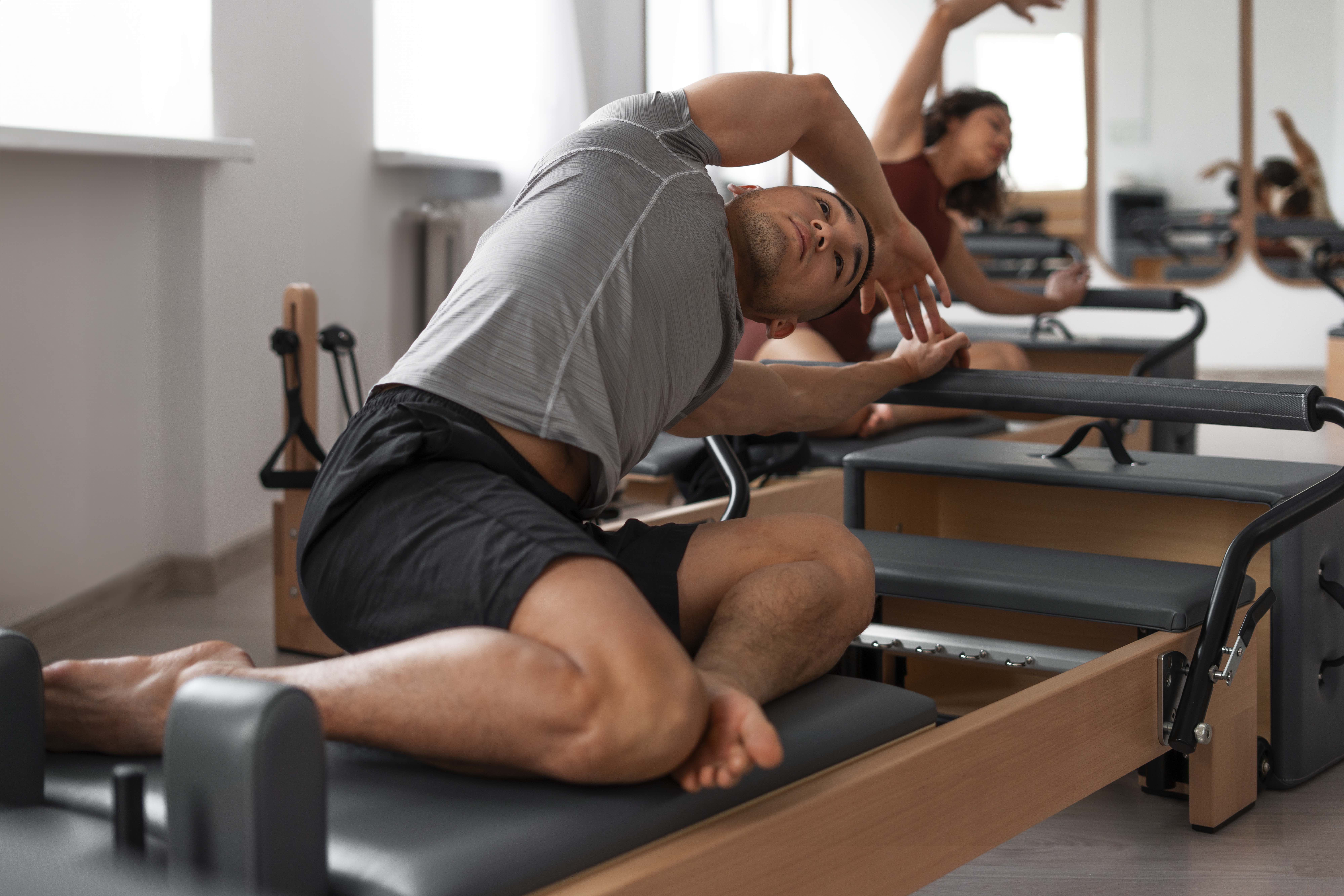
Pilates for men is rapidly shifting from niche to necessity, especially for those dealing with tight hips, back pain, or desk-related stiffness. At The Pilates Clinic in Wimbledon, reformer Pilates for men is used to improve mobility, core strength, and long-term injury resilience—backed by emerging research and real-world clinical results.


Follow us on Social media


